


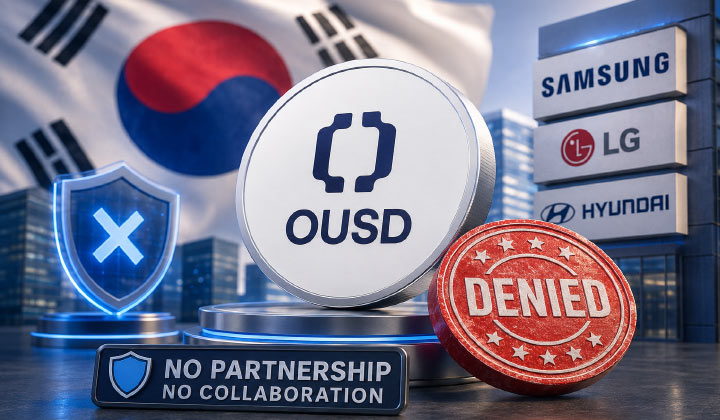
Open USD (OUSD) entered the stablecoin market with claims of backing from more than 140 corporate partners, but several prominent South Korean companies have now said they never formally agreed to join the project.
The reports have raised questions about the depth of the consortium behind the upcoming stablecoin, even as major global companies such as Stripe and Coinbase continue to support the initiative. The controversy highlights the growing scrutiny surrounding large blockchain partnerships before products reach the market.
Open USD was launched on June 30 by the independent group Open Standard. It’s a fully reserved, dollar-backed stablecoin that gives much of the interest earned on reserves back to participating businesses. The project presents itself as a collaborative alternative to traditional stablecoin issuers.
The first partner list included some of the biggest names in finance and tech, like Visa, Mastercard, Stripe, American Express, BlackRock, Google, Coinbase, Ripple, Standard Chartered, and DBS. The group also listed 13 South Korean companies, including Samsung Electronics, Shinhan Financial Group, Dunamu, K Bank, and several major card issuers.
But Korean media reports say several of these companies have denied making any formal commitment. A Samsung Electronics spokesperson reportedly said the company had not had official talks and did not know what role it would play.
Shinhan Financial Group, Dunamu, and K Bank also reportedly said they only agreed to look at the proposal after Open Standard contacted them. Some executives said they first found out they were listed as partners from media reports.
The disagreement seems to come from different views on what “partner” means. Open Standard said the companies had signed up to use Open USD, but several Korean firms said talks were only early discussions and not a firm commitment.
Importantly, there is no sign that Open USD itself is at risk. Stripe has confirmed it will make OUSD the default stablecoin for business users, and Coinbase has announced support through its Base blockchain network.
Still, analysts say this situation shows that big consortium announcements often involve different levels of commitment. In the end, Open USD’s long-term success will depend more on whether businesses actually use the stablecoin after it launches than on how many logos appear at launch.
Several Korean Companies Say They Have Not Formally Joined Open USD Alliance, Express Confusion Over Inclusion
According to Chosun Biz, several Korean companies listed as Open USD (OUSD) alliance members, including Samsung Electronics, Dunamu, KakaoBank, Hyundai Card, KB Kookmin… pic.twitter.com/hdkJA6Kd9Z
— Wu Blockchain (@WuBlockchain) July 3, 2026
Stay informed with the latest trends in Web3, blockchain innovation, and cybersecurity updates at 3verseTV
You need to login in order to Like
















Leave a comment