


Key Takeaways
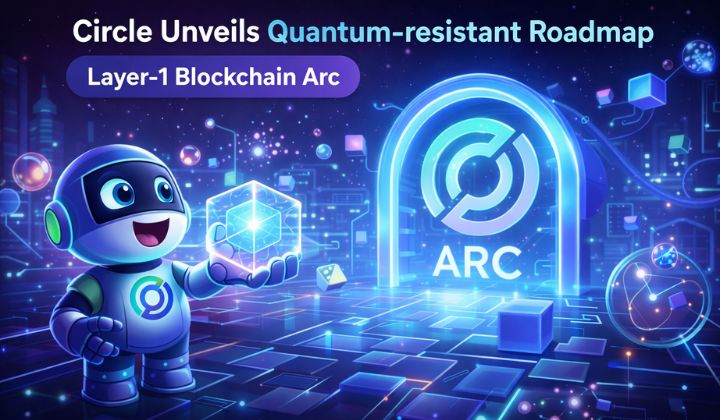
- In an effort for protecting cryptocurrency infrastructure from new risks posed by quantum computing, Circle published a quantum-resistant roadmap for its Arc blockchain.
- Arc focuses on commercial blockchain use cases with USDC connectivity. As Google warns that quantum computers could crack Bitcoin cryptography in a matter of minutes, industry fears are growing.
- The Bitcoin community remains split even as blockchains like Algorand, Ethereum, and Solana seek answers. As getting ready for Q-Day becomes crucial for long-term crypto security, experts emphasise the necessity for immediate action, particularly for wallets with exposed public keys.
“Is your blockchain ready for Q-Day, or just one step away from decay?” For its layer-1 blockchain, Arc, stablecoin issuer Circle has published a post-quantum security roadmap to implement solutions across every tier of the network’s tech stack.
Circle Internet Financial is a fintech company that develops digital payment solutions powered by blockchain technology. It is best known for creating USD Coin (USDC), a widely used stablecoin for secure and fast crypto transactions.
When Arc releases on the mainnet, Circle plans to integrate it gradually, beginning with quantum-proof wallets and signatures, the company announced on Thursday.
The company stated that solutions at the validator level and associated infrastructure will be introduced later and that this functionality will be opt-in.
“Quantum resilience must move beyond ideas and become part of core infrastructure.”
– Circle
Google’s Warning Pushes Quantum Security Into Focus
Circle’s roadmap aligns with recent warnings from Google and the California Institute of Technology that functioning quantum computers may arrive sooner than anticipated and require less processing power than previously believed.
Google has claimed that Bitcoin’s cryptography could be cracked by quantum computers in 9 minutes
“Inaction is the real risk, this conversation can’t wait. Wallets with exposed public keys are already vulnerable. Migrate before Q-Day, or risk losing it all.”
Circle
When Arc launches on the mainnet, anticipated sometime in 2026, Circle stated that a post-quantum signature mechanism will be adopted, enabling quantum-resistant wallets.
With the USDC (USDC) stablecoin, Arc, which is presently operational on a public testnet, aims to provide businesses with access to a wide range of use cases.
Circle will implement a quantum solution that guarantees the privacy of balances, transactions, and other financial data at some point after the mainnet launch.
Bitcoin Developers Divided On Next Steps
Circle stated that it will eventually deploy quantum solutions for Arc validators and its off-chain infrastructure, which includes hardware security, cloud environments, and access restrictions.
Although the majority of the cryptocurrency industry acknowledges that quantum computing poses a real threat to cryptocurrencies, there is still disagreement over whether all coins are at risk or only wallets with exposed public keys.
Algorand might be the most quantum-ready blockchain, according to a March 31 Google research report, while the Ethereum and Solana ecosystems are actively looking for ways to be ready for Q-Day.
There is greater disagreement within the Bitcoin community over what developers ought to do.
Final Thought
Blockstream CEO Adam Back, one of the most powerful voices in the Bitcoin ecosystem, claims that quantum threats are greatly exaggerated and that it will take decades before any action is required.
Through Bitcoin Improvement Proposal 360 (BIP-360), security researcher Ethan Heilman and colleagues have proposed a new output type for Bitcoin called Pay-to-Merkle-Root, which aims to defend Bitcoin addresses from hypothetical short-exposure quantum attacks.
Heilman told Cointelegraph in February that the implementation might take seven years.
Stay informed with the latest trends in Web3, blockchain innovation, and cybersecurity updates at 3verseTV
You need to login in order to Like















Leave a comment