



Key Takeaways
- Ethereum faces rising pressure, with a 59% chance of losing its #2 spot by 2026, as per Polymarket. While ETH shows short-term strength above $2,000, its growth depends mainly on price.
- In contrast, Tether is expanding fast due to real-world use and rising liquidity demand. The stablecoin market has surged to $310 billion, driven by payments, trading, and transfers.
- This shift shows a changing crypto trend, utility over speculation. If this continues, stablecoins could reshape rankings, while Ethereum must boost adoption and network usage to stay competitive.
Are we witnessing the biggest shift in crypto rankings yet? This year, a growing stablecoin economy is posing an individual challenge to Ethereum’s attempt to regain its position as the market’s number two.
The faster-growing market of dollar-denominated cryptocurrency assets is changing how capital moves through the market, with USDT leading the way and drawing liquidity away from ETH at the margins, even while Bitcoin is still the dominating benchmark. It raises one main question! Will it be able to maintain its position in the world rankings and lag behind BTC?
Market Predicts that ETH has a 59% chance of losing its second position in 2026, according to Polymarket stats. This indicates how quickly market perceptions are shifting and is a significant increase from 17% earlier this year.
“The market is no longer just watching growth, it’s watching sustainability and real-world use,” said a crypto market analyst.
ETH Technical Overview
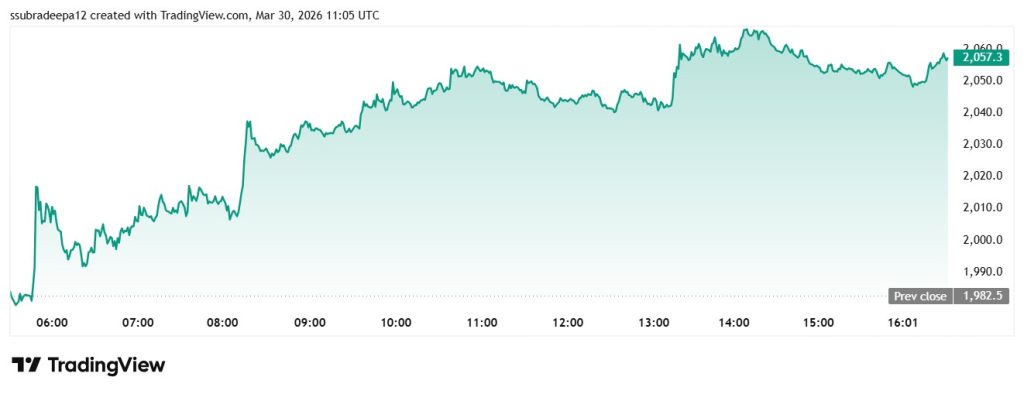
The price of Ethereum (ETH) today is approximately ₹1,93,974.24 ($2,035.27). Ethereum’s price has increased by more than 3% during the past day, indicating short-term strength. The market is showing consistent purchasing interest as it is trading near its daily high.
The price is remaining above the $2,000 mark, which serves as a crucial support level at this point. If Ethereum holds this level, it may continue its upward move in the near term. The $2,037 level is serving as an immediate barrier on the upward. The price may rise if there is a clear break over this.
“The race for the #2 spot is tighter than ever, and the next few years could redefine crypto rankings,” the analyst added.
Rapid Stablecoin Growth Changes Market Trends
The shifting dynamics of the cryptocurrency industry are reflected in this pattern. Ethereum’s valuation is dependent on price increase. Stablecoins, on the other hand, expand their quantity due to the need for settlement and liquidity.
Over the last five years, the stablecoin industry has grown significantly. In 2020, its total market value was approximately $5 billion; today, it is approximately $310 billion. Approximately 58% of that is made up of Tether.
During this time, USDT alone has seen growth of more than 600%. USDC and other stablecoins have also seen significant increases. In terms of growth rate during the same period, XRP has also surpassed Ethereum. Increased use in cross-border transfers, payments, and trading is the main driver of this growth.
Conclusion
“Will it hold the throne, or be overthrown?” A move from speculative asset dominance to stablecoin utility is shown by the possibility that USDT will switch to ETH. During market downturns, cash frequently flows into USDT.
While some analysts predict a bullish breakout for ETH later in 2026, others warn of substantial, short-term pullbacks that might lead to a market cap shift. The need for a reliable asset to hold value during periods of market instability is driving the growth of USDT.
However, stablecoins like Tether are expanding rapidly. Real use, simple transfers, and liquidity are more important in this new rivalry than price increases. Because stablecoins are more compatible with conventional financial systems, this may help draw in other institutions.
Stay informed with the latest trends in Web3, blockchain innovation, and cybersecurity updates at 3verseTV
You need to login in order to Like
















Leave a comment