


Key Takeaways
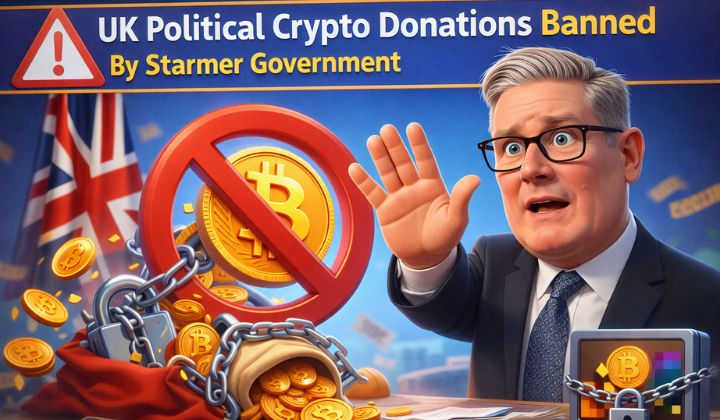
- The UK government, led by Keir Starmer, has frozen all crypto donations to political parties. The move aims to stop hidden foreign funding and protect democratic transparency.
- The decision follows the Rycroft Review, which flagged risks in anonymous crypto transactions. The rule applies to donations of all sizes and takes effect immediately.
- Political parties must return any crypto funds within 30 days once the law is enforced. Failure to comply may lead to criminal penalties.
- Overseas donations are now capped at £100,000 per year. The freeze is a temporary pause, not a permanent ban, to allow better regulations.
“I wasn’t here to protect any political party,” said Philip Rycroft. “My focus was simply to protect our democracy.”
Should crypto donations be banned in political campaigns? The Press Association reports that Prime Minister Keir Starmer’s cabinet in the United Kingdom has declared an immediate ban on bitcoin contributions to political parties. The primary worry is that cryptocurrency can conceal the source of funds, facilitating the entry of foreign capital into UK politics.
This action demonstrates that authorities now view anonymous digital payments as a threat to democracy rather than merely a financial problem. Consequently, attempts to prevent foreign meddling have turned their attention to cryptocurrencies.
The Rycroft Review precedes the ruling. The new rule starts immediately and applies to donations of all sizes.The government-commissioned Rycroft review led to the restriction, which goes into force today and applies to donations of all sizes.
Once legislation is implemented, parties have 30 days to return any cryptocurrency they have received; else, criminal penalties will be imposed. Additionally, the annual maximum on overseas donations from British expatriates will be £100,000.
Not A Ban! But A Pause!
Former senior civil servant Philip Rycroft, who wrote the assessment, framed the moratorium as a pause for policy to catch up with reality rather than advocating for a permanent prohibition.
However, there is a high bar for lifting the regulations outlined in the Representation of the People Bill that is presently being considered by Parliament.
There was a lot of tension throughout the announcement. Reform UK members demonstrated their strong opposition by staging a dramatic walkout from Parliament.
Prime Minister Keir Starmer sharply criticised Nigel Farage at the heart of the dispute, saying he would “say anything, no matter how divisive, if he is paid to do so.”
Deep disagreements regarding the future of cryptocurrency in politics were brought to light by the incident, which transformed a policy update into a contentious political confrontation.
Conclusion
“Democracy demands clarity, not crypto shadows.” The UK has set a firm boundary. It prioritises openness over unbridled innovation by freezing cryptocurrency donations.
Closing gaps that can allow covert foreign influence is the goal of leaders like Keir Starmer. However, people like Philip Rycroft remind us that this is really a break and that cryptocurrency in politics is not going away.
You need to login in order to Like















Leave a comment