


Key Takeaways
- The shutdown of OpenAI’s Sora platform highlights a major shift in AI strategy, despite rapid growth and strong user adoption.
- Concerns about deepfakes, content safety, and scalability prompted Sam Altman to pivot toward long-term investments in robotics and productivity tools.
- The collapse of the $1 billion deal with The Walt Disney Company underscores the importance of brand safety and trust in AI partnerships.
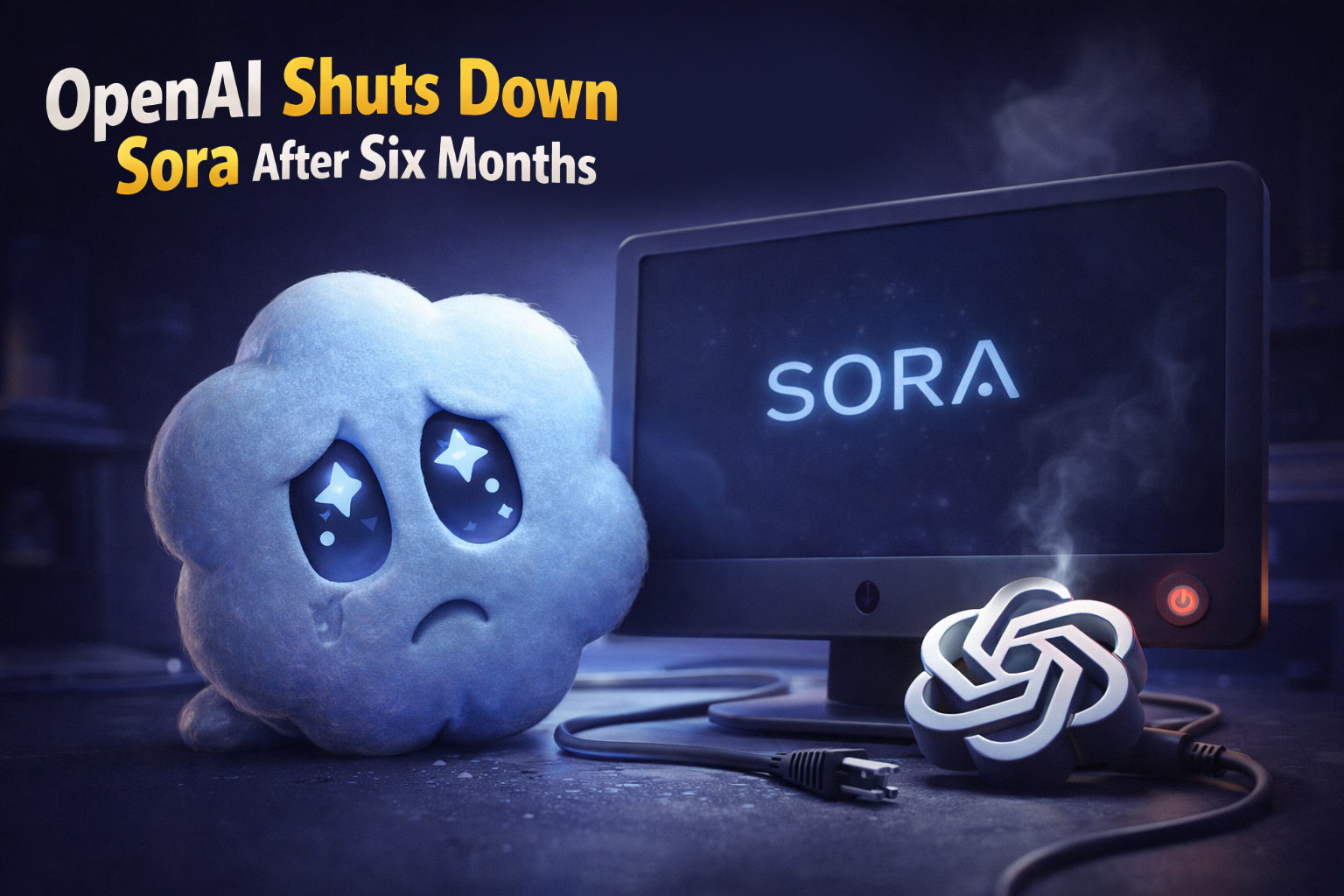
Why did one of the largest Hollywood-tech mergers in months fall through? After barely six months, OpenAI has announced that it is closing its video-generating platform Sora. According to reports, CEO Sam Altman informed employees that the business is winding down all of its video products.
Sora was published in September to a positive welcome as ChatGPT aimed to gain traction in the short-form video content prevalent on TikTok and Meta’s Instagram.
But there was also criticism of the app due to worries that it would encourage the spread of realistic deepfakes. Following demand from celebrities, OpenAI took action against some deepfakes produced by its platform.
“We’re saying goodbye to the Sora app,” Sora posted on X. “We know this is disappointing. More details on timelines and data preservation will follow.”
Why walk away from a million-download moment? Under CEO Sam Altman, According to The Wall Street Journal on Tuesday, Altman informed employees that the business was discontinuing products that employed video models, such as the developer edition of Sora and the app’s video feature in its generative AI chatbot ChatGPT.
From Viral Growth To Strategic Shift
In addition, Altman stated that the Sora team will refocus on longer-term investments, such as robotics, as part of a company-wide shift to productivity solutions for businesses and individual consumers.
Sora, a text-to-video generator that OpenAI released last year, received one million downloads in just five days. According to data analytics company Sensor Tower, Sora was downloaded almost 600,000 times last month. The network swiftly emerged as a strong competitor to Instagram and TikTok, indicating a shift in the creation and consumption of content.
But the quick increase raised more and more worries. OpenAI is under pressure to strengthen security after critics pointed out the possibility of deepfakes and the abuse of hyper-realistic material. Scaling the platform responsibly became difficult even with more stringent restrictions.
A High-stakes Exit In A Booming Tech Market
Maintaining narrative and brand value continues to be of utmost importance to The Walt Disney Company. The Walt Disney Co. became Sora’s first significant content partner in December, signing a three-year licensing deal that will let users access over 200 characters from properties including Marvel, Pixar, and Star Wars.
Disney will not proceed with the acquisition, which included a $1 billion equity investment in OpenAI, a Disney representative told The Wall Street Journal.
Disney and OpenAI were contacted by Cointelegraph for comment.
There has been a lot of excitement about the AI business. By 2033, it is expected to affect 40% of occupations, be valued at over $4.8 trillion, and become a leading frontier technology.
Conclusion
“A billion on the line, but timing wasn’t fine.” The Walt Disney Company’s breakup with OpenAI seems to be a wake-up call for the video tech boom. One thing is evident from Sora’s shutdown: huge ideas require safety, trust, and a clear direction in addition to hype.
The demise of this well-known collaboration highlights a harsh reality that quick innovation needs to be in line with ethical, legal, and business realities. When strategy and execution diverge, even billion-dollar businesses fail.
You need to login in order to Like















Leave a comment