


Complete NFT Security Guide
As the NFT space has grown in prominence, it has also become a more appealing target for hackers and scammers looking to profit from the huge reward potential and lack of regulations.
The excitement surrounding NFTs and the metaverse has caused businesses of all shapes and sizes to rush into launching new platforms without putting in place the necessary security measures, which has made these scams even more prevalent.
It is extremely unlikely that anyone will lose their assets due to a blockchain-level hack because of its inherent security
but there are an increasing number of other scams involving phony NFTs, traders inflating prices by selling NFTs to themselves, bugs that let attackers get huge discounts on popular NFTs, the increasing use of NFTs for money laundering, and so forth.
This implies that even in cases where you are not physically robbed, you may still lose your NFTs.
Let’s take a look at simple ways to protect your NFTs.
-
Develop complex credentials
Ideally, you should use a combination of capital letters, numbers, and symbols to make it more difficult for hackers to guess your login credentials. Additionally, it’s imperative that you keep your login information confidential and don’t email or text it to anybody.
If you need to save credentials and passwords in one location, the best solution is to store them in physical format. Employ a safe password organizer, or jot down your password and stash it in a secret location, such as a safe deposit box.
By keeping your NFTs offline, you can reduce the likelihood of a data breach and prevent someone from accessing them.
-
Use offline storage
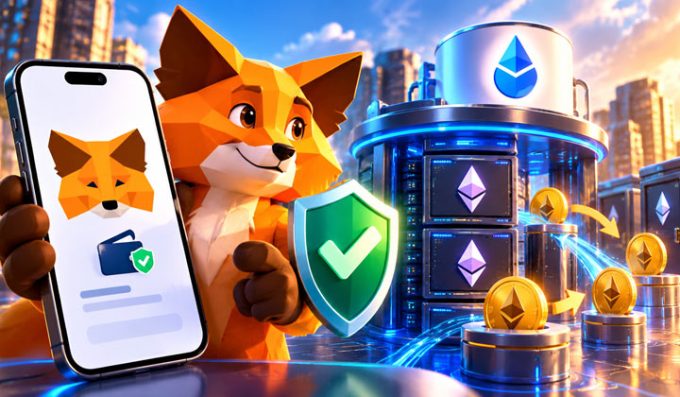
Keep your digital assets offline, especially if you won’t be selling or trading them immediately, as even centralized systems are susceptible to hacking. Invest in a hardware wallet instead, which requires you to personally sign every transaction and keeps anyone from accessing your money from a distance.
But you are ultimately responsible for your own security, which usually means backing up your seed phrases and private keys and keeping them in a safe place. Additionally, you ought to refrain from storing all of your NFT and cryptocurrency holdings in one wallet.
-
Store NFTs in a custodial wallet
Compared to non-custodial wallets, custodial wallets are typically simpler to operate. They are therefore a fantastic choice for newcomers.
Custodial wallets frequently include strong security features to protect your NFTs from loss or hacking.
Some custodial wallets offer insurance to replace the value of your NFTs in the event of loss or theft. You don’t need to be concerned about safeguarding or maintaining your private key.
-
Avoid scammers and copycat websites
Scammers frequently take on the identity of powerful individuals in an attempt to win your trust and steal your personal data. Similarly, be on the lookout for fraudulent websites that imitate the real ones identically, only to cause you to lose your money due to a security breach in your wallet.
When interacting with NFT transfers, exercise caution; never click on links from unapproved channels and confirm that the individual you are engaging with is who they say they are.
-
Ensure the credibility of your marketplace
The marketplace you select needs to be reliable and secure. Examining their public audits, which guarantee that their smart contracts are error-free and secure for use, will allow you to confirm this.
However, it might be preferable to stay with the well-established NFT marketplaces, as this might be harder to obtain on more recent platforms.
Being cautious is always a beneficial idea, even though it’s definitely worth testing out new platforms, especially if there are major incentives or reward potential.
Make sure you research a platform, look out for anything strange, and take the required safety precautions before committing to it, especially if it’s new.
-
Copyright your art
Copyrighting your artwork is one of the best ways to prevent NFT theft. By doing this, you can be sure that no one copies, distributes, or displays your artwork without your consent.
To copyright your artwork, you must register with the copyright office in your country. That would be India’s Copyright Office.
-
Add a watermark
You can discourage thieves by including a noticeable watermark on your digital artwork. Adding a watermark to your artwork makes it harder for someone else to claim it as their own.
It could be a text overlay or a picture over your original artwork. It is easier for others to recognize your work if you personalize it with your name or emblem. A watermark can make it more difficult for someone to benefit from your artwork without your consent, even though it cannot totally eliminate NFT theft.
Common NFT scams to beware of
Let’s examine the most prevalent types of spam Non-Factor Transactions (NFTs).
Fake NFT Collections
Teams from the NFT airdrop Teams that want to trick customers into buying a collection that is “active” frequently employ NFTs to create the impression that the collection has active wallet users.
Phishing NFTs
Phishing Collection Names: By naming an NFT, such as “$10,000 USDT,” and moving it to a user’s wallet, threat actors taint a user’s transaction history.
Those who are naive and quickly copy and paste addresses, mistakenly believing it to be the address of a trustworthy counterparty they have previously transacted with, end up sending tokens to the attacker’s wallet.
Phishing Airdrops
Threat actors present a message that deceives a user into visiting a phishing website using the NFT picture and metadata text. Common observations reveal three types of NFT phishing airdrops.
Redeemable Tokens or NFTs
The NFT metadata tricks a user into connecting to a fraudulent smart contract and granting wallet permissions in order to retrieve a reward. Then, the malicious smart contract starts taking money out of their wallet.
Phishing dApp
The attacker uses NFT information to pose as a trustworthy dApp. When the user links their wallet to a rogue smart contract, it becomes empty.
Malicious Software
To update their wallet or collect a reward, the user needs to download a software update or browser extension. In the aforementioned example, an attacker sent Phantom wallet users an NFT via airdrop with instructions to upgrade their wallet security and visit a phishing website.
The user is unaware that the downloaded software contains malware that will empty whatever wallet they may have on the hacked device.
Scammers are always thinking of creative and novel ways to trick people. The NFT space has unquestionably created amazing new chances and benefits that can change people’s lives. However, the NFT space also carries significant risks.
Those who lack knowledge may find it difficult to avoid these frauds because they frequently focus on easy targets. On the other hand, abiding by the aforementioned guidelines will significantly lower your chance of becoming a fraud victim.
You need to login in order to Like