
Tokenizing Real World Assets
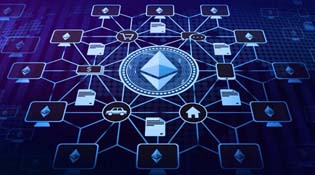
Interest in blockchain technology and cryptocurrencies has grown over the past few years. As this sector continues to develop, novel and inventive applications of these technologies have emerged. The relationship between real-world assets and non-fungible tokens (NFTs) is one such instance. This link is generating a fresh surge of enthusiasm and possibility for both NFTs and conventional tangible assets.
The tokenization of Real-World Assets (RWA) is a hot topic in the blockchain community, and it’s bringing in a new era of real estate investing where investors don’t have to buy properties entirely. Among the main benefits provided by this ground-breaking idea are fractional ownership, enhanced liquidity, and better security. As blockchain technology advances, we anticipate an increase in the tokenization of physical assets, thereby transforming the digital investing landscape.
Transitioning to Real-World Asset NFTs
The first wave of Non-Fungible Tokens (NFTs), as demonstrated by initiatives like Cryptopunks, was primarily concerned with digital collectibles. But there has been a noticeable move in favor of material goods from the actual world. Although promising, integrating these assets into NFTs has necessitated legal involvement to guarantee regulatory compliance. Innovations such as ERC-5505 have attempted to streamline asset management in spite of obstacles. This merging of the physical and virtual worlds is a big advancement, albeit not quite as great as the previous crypto market craze.
Technical Mechanisms for Asset conversion to NFTs
Complex technical processes digitize real-world assets using defined NFT protocols, ensuring cross-platform compatibility. By providing information on provenance, ownership, and distinctive qualities, NFTs encapsulate metadata and increase the asset’s digital worth and distinctiveness.
Blockchain technology is a key component of ensuring the security and immutability of digital tokens. To further enhance the visual appeal of assets, NFT display technology is essential for presenting them in an engaging and interactive way. Real-world assets can seamlessly integrate into the digital NFT environment through the careful fusion of technical accuracy, blockchain security, and immersive presentation.
NFT Use Cases for Real-World Assets
NFTs have a plethora of potential applications that relate to real-world assets, and they are still growing. Notable instances include the following:
Real estate tokenization:
By using NFTs to represent property ownership, individuals can invest in real estate without having to own a property outright.
Art NFTs:
An increasing number of artists are now producing and offering their work as NFTs, providing a new way to buy and sell art and support up-and-coming artists.
NFTs for luxury goods authentication:
Brands can prevent customers from buying fake goods by using NFTs to confirm the legitimacy of high-end luxury goods.
Collectibles on the blockchain:
Digital collectibles like exclusive trade cards and virtual objects in video games are made with NFTs.
Advantages of NFTs for Real-World Assets
Security and immutability:
NFTs use Distributed Ledger Technology (DLT) to store transaction records on an immutable distributed ledger, ensuring security and immutability. The tamper-proof ledger creates an unchangeable record of asset ownership and transfers.
Smart contract integration:
The incorporation of NFTs into smart contracts enables the provision of additional features and automated trading. Smart contracts can simplify transactions by automating the transfer of a physical NFT, reducing reliance on middlemen..
Legitimization of secondary markets:
Smart contracts can be used to monetize secondary trading. They can be programmed to enable royalty payments on subsequent sales, which will maintain and stimulate the secondary market.
Free-flowing market:
The tokenization of real assets changes the market, promoting a decentralized financial system and guaranteeing inclusion for all parties involved. Asset tokenization allows for the fragmentation of ownership, giving each shareholder a voice in group decision-making and creating a transparent, reliable market structure.
Accessibility and inclusive growth:
By providing opportunities for ownership and involvement in assets that are normally out of the reach of a single collector, NFTs redefine accessibility. This removes barriers and creates opportunities for a diverse range of traders and collectors.
Reduced counterparty risk:
The tokenization of real assets greatly reduces the counterparty risk present in conventional transactions, expediting the procedure and lowering the possibility of bad faith claims.
Challenges and considerations
The use of NFTs for real-world assets is not without its difficulties and considerations, as is the case with any new technology. Here are a few of them:
Regulation:
The real-world asset tokenization and NFT regulatory environments are still developing. Regulators should set rules when these technologies become more widely used in order to safeguard investors and guarantee compliance.
Valuation:
Accurately pricing the assets that the tokens represent is one difficulty in using NFTs to represent real-world assets. The upending of conventional ownership systems may necessitate the creation of new valuation techniques.
User experience:
The user experience is going to be essential if NFTs are to realize their full potential. In order to promote broader adoption, platforms and marketplaces need to be easy to use and accessible, even for individuals with less technical expertise.
The Future of Real-World Asset Tokenization and NFTs
In the future, NFTs will be able to easily become part of the DeFi (Decentralized Finance) economy. Instances such as the Hifi Protocol democratize access within the DeFi ecosystem by enabling NFTs to serve as collateral for loans. The introduction of NFTs and fractionalized variants (F-NFTs) makes collateralized loans and long-standing goals in DeFi possible, and it promises to empower regular users.
The NFT-enabled tokenization of real-world assets is redefining approaches to real estate investing. It provides clear market structures, manages counterparty risks, and permits fractional ownership. Its potential to increase accessibility and make real estate investing more inclusive and transparent than before is what will have a revolutionary effect. Blockchain App Factory’s team of professionals is prepared to offer NFT-powered tokenization of real-world asset services; get in touch with us for thorough advice.
You need to login in order to Like