

Decentralized asset management revolutionizes investing and asset management. This strategy gives customers ownership, transparency, and access to global financial markets via blockchain, smart contracts, and DAOs.
Even while there are certain challenges, there are also many benefits that might help create a more open and accessible financial system. Decentralized asset management is great, but everyone must remain informed, active, and responsive as the financial system evolves.
In the constantly shifting financial landscape, decentralized asset management has become a disruptive force that has the ability to change conventional investing paradigms. This innovative method of asset management, which is based on blockchain technology and decentralized finance (DeFi) protocols, offers more control, transparency, and accessibility over financial portfolios.
What Is Decentralized Asset Management?
Decentralized asset management is the practice of managing, trading, and investing in different financial assets using decentralized platforms running on blockchain technology. Decentralized asset management empowers individuals to actively control and manage their assets, unlike traditional financial institutions that act as intermediaries in the asset management process.
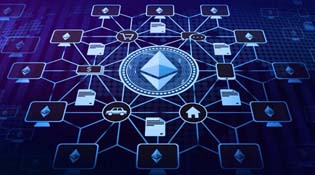
Smart contracts and self-executing programs that automatically carry out an agreement’s terms and eliminate the need for middlemen while promoting trust across the ecosystem make this feasible.
Decentralized autonomous organizations (DAOs), which are community-governed organizations functioning on blockchain networks, are at the core of decentralized asset management. DAOs help with decision-making in the areas of platform governance, investment strategies, and asset allocation.
By possessing governance tokens, members of decentralized autonomous organizations (DAOs) may collaboratively shape the organization’s course and make consequential decisions.
The advantages of decentralized asset management
Security and Transparency:
Each and every one of the decentralized asset management ecosystem’s transactions and decisions are immortalized on the blockchain thanks to its intrinsic transparency. This openness increases participants’ trust because it is very difficult to change or falsify historical records. Furthermore, blockchain’s strong security features guard against hacker assaults and unwanted access.
Decreased Intermediaries:
Conventional asset management frequently requires the involvement of several intermediaries, which increases costs and delays processing. Decentralized asset management eliminates the majority of middlemen, lowering costs and speeding up settlements and transactions.
Universal Access:
Decentralized platforms, accessible to everyone with an internet connection, now provide equal access to those previously excluded from traditional financial systems. The financial services provided by inclusiveness may benefit the underbanked and unbanked communities.
Adaptability and Customization:
Users may design and customize investing strategies to fit their unique risk tolerances and preferences using decentralized asset management systems. Smart contracts execute these tactics automatically, eliminating the need for ongoing supervision.
Liquidity:
DeFi protocols often make it easier for liquidity pools to form, allowing users to exchange and sell assets with ease. Thanks to this liquidity, large trades have less of an influence on asset prices, which also improves market efficiency.
Challenges Of Decentralized Asset Management
Regulatory Uncertainty:
As the regulatory environment for decentralized finance continues to change. To guarantee compliance and investor protection without impeding innovation, clarity is required.
Smart Contracts Risks:
Despite their tamper-proof design, unscrupulous actors may still be able to take advantage of their weaknesses. To reduce possible hazards, the sector has to give security audits and code reviews top priority.
User Experience:
For inexperienced users, many DeFi solutions have intricate and frightening user interfaces. Enhancing the user experience and making the technology more approachable will be crucial before its widespread use.
Volatility:
The markets for cryptocurrencies are renowned for their extreme swings. Although there is a chance for profit, there are also a lot of risks involved that investors should consider when managing their investments.
Scalability:
Because large transaction volumes can cause congestion and higher costs, blockchain networks’ scalability is an important issue. The industry has to keep developing ways to increase the scalability of networks.
Conclusion
Decentralized asset management is a key component of the larger DeFi movement that is changing the financial environment. Technology has the power to democratize finance and make it more open, effective, and accessible. Traditional financial institutions have already recognized the disruptive potential of decentralized asset management and are exploring ways to integrate these innovations into their services.
To sum up, decentralized asset management is a fundamental change in how people invest and manage their assets. Through the use of blockchain technology, smart contracts, and DAOs, this methodology endows users with increased autonomy, lucidity, and entry into international financial markets.
Even though there are still difficulties, there are a ton of potential advantages that might lead to a more decentralized and inclusive financial future.
As the financial sector continues to develop, players must remain educated, involved, and receptive to the revolutionary potential that decentralized asset management may offer.
You need to login in order to Like