


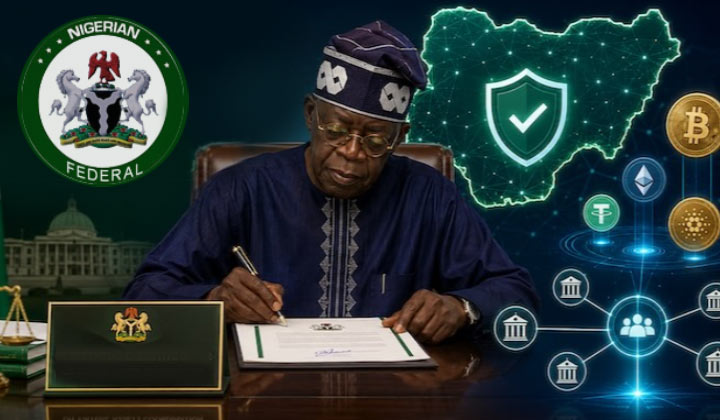
Nigeria has taken a major step towards strengthening its digital asset framework after President Bola Ahmed Tinubu signed an executive order aimed at coordinating cryptocurrency regulation and taxation. The order creates a new Virtual Asset Council to improve cooperation between financial regulators, tax authorities and capital market agencies while supporting responsible innovation. It also calls for updated tax policies on digital assets, reflecting Nigeria’s growing role as one of Africa’s largest cryptocurrency and stablecoin markets.
JUST IN: 🇳🇬 Nigeria establishes virtual asset council to coordinate crypto policy and regulation.
— Watcher.Guru (@WatcherGuru) July 20, 2026
According to a statement from presidential adviser Bayo Onanuga, the executive order is designed to address the fragmented approach that has existed across different government agencies overseeing virtual assets. The new framework seeks to create a more coordinated regulatory system while protecting investors and encouraging innovation.
The newly established Virtual Asset Council will be led by senior financial regulators and will oversee policy development for digital assets. It is expected to improve collaboration between agencies responsible for financial markets, taxation and consumer protection.
The executive order also directs Nigeria’s tax authority to update its policies relating to digital assets. While further details are expected, the move follows earlier tax reforms requiring crypto service providers to link transactions to Tax Identification Numbers (TINs) and, in some cases, National Identification Numbers (NINs).
Nigeria has become one of Africa’s fastest-growing crypto markets. According to a recent report by the International Monetary Fund (IMF), the country accounted for nearly 60% of stablecoin inflows into sub-Saharan Africa since 2019. Between July 2023 and June 2024, Nigeria recorded around $59 billion in cryptocurrency inflows, highlighting the growing importance of digital assets in the country’s financial system.
The IMF has acknowledged the benefits of digital assets, particularly in cross-border payments, while urging policymakers to balance innovation with effective regulation. The organisation noted that governments should create clear rules that encourage technological progress without exposing the financial system to unnecessary risks.
The latest executive order reflects Nigeria’s efforts to strike that balance. Rather than restricting digital assets, the government appears focused on building a coordinated regulatory structure that promotes responsible growth while improving oversight and tax compliance.
As cryptocurrency adoption continues to expand across Africa, Nigeria’s latest policy move could serve as a model for other countries seeking to encourage innovation while maintaining financial stability. The creation of a central coordinating body also signals that digital assets are becoming an increasingly important part of the country’s long-term financial strategy.
Stay informed with the latest trends in Web3, blockchain innovation, and cybersecurity updates at 3verseTV
You need to login in order to Like

















Leave a comment