

Unveiling the Power of Security Tokens
By Kapil Rajyaguru
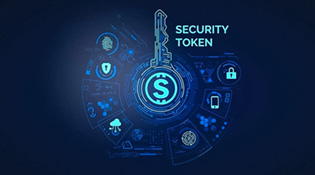
Traditional banking and blockchain technologies combine in security tokens. Security tokens revolutionize investing with lower transaction costs, liquidity, fractional ownership, and transparency. Market viability and investor safety in security tokens are dependent on regulation. Tighter regulations and more advanced technology may make security tokens significant in the banking industry.
Without a doubt, blockchain is having a major impact on almost every industrial vertical that currently exists. Blockchain technology enables the creation of a wide range of new company forms. Since the internet’s founding, blockchain technology has driven significant breakthroughs such as decentralization and trustless networks.
The use of tokens is one of a number of critical elements that have contributed to the development of blockchain technology. Both the name “Blockchain” and its lexicon might be confusing. For most people, tokens, coins, and cryptocurrencies are interchangeable. All of them, nevertheless, serve a different purpose from one another. Tokens come in several kinds. We shall talk about security tokens in this blog. Tokens with secure features are an investment.
Security tokens originate from traditional financial products like stocks, bonds, real estate, and more. Security tokens provide investors with ownership rights and are subject to securities laws, unlike utility tokens, which provide users with access to a good or service. These tokens offer safety, transparency, and ease of transfer due to their creation using blockchain technology.
What Are Security Tokens?
Tradeable digital assets that derive their value from an external asset are known as security tokens. Federal legislation mandates security controls. It is necessary for security tokens to adhere to these rules. Noncompliance could lead to serious repercussions, including fines, and potentially derailing the project’s progress.
These represent assets such as ownership stakes in real, tangible underlying revenue streams, businesses, or dividend or interest payment rights. They serve the same purpose economically as stocks, bonds, and derivatives. Security tokens must comply with legal constraints to be used for various purposes. This is also known as collateralized tokens. The goal of security token offerings (STOs) is to boost investor trust in a range of investment projects.
How Do Security Tokens Function?
Security tokens use blockchain protocols, such as Ethereum, to function on decentralized networks. Smart contracts, which are self-executing contracts with predetermined rules embedded on the blockchain, enable the issuance and maintenance of security tokens. Smart contracts allow for the automation of a variety of procedures, such as voting rights and dividend payments, as well as seamless compliance with regulations.
Features And Advantages of Security Tokens
- Security tokens increase liquidity by being exchangeable 24/7 on various digital asset exchanges. Due to its accessibility, investment opportunities are now available to anyone, everywhere, irrespective of location.
- Investors can buy a portion of high-value assets, such as fine art or real estate, by splitting security tokens into smaller units. Rich people used to be the only ones with access to profitable investment possibilities, but this fractional ownership model makes them more accessible to everyone.
- Investors the immutable transaction history and transparent record-keeping guaranteed by blockchain technology, investors may access ownership and asset performance information in real time. This openness lowers the possibility of fraud and boosts investor trust.
- Traditional financial systems frequently use several middlemen, resulting in high transaction costs. Lower transaction costs are the result of streamlining the procedure and eliminating middlemen, thanks to security tokens.
- The settlement of traditional financial transactions might take many days or even weeks. Security tokens greatly shorten settlement times, leading to quicker and more effective transactions.
What Are Security Token Offerings?
The blockchain-based counterpart of initial public offerings (IPOs) is called Security Token Offerings (STOs). Companies issue security tokens in the form of shares during a token sale (STO) to represent ownership or equity. Unlike Initial Coin Offerings (ICOs), security token offerings (STOs) are legally solid investment options since they adhere to regulatory standards.
Conclusion
Security tokens are an intriguing new concept that blends the revolutionary potential of blockchain technology with the finest aspects of conventional banking. Security tokens are changing the investing scene by giving investors access to lower transaction costs, more liquidity, fractional ownership, and transparency. To ensure the security token market’s long-term sustainability and to protect investors, regulatory compliance is still critical. As rules tighten and technology advances, security tokens are poised to become a major player in the financial industry.
You need to login in order to Like