



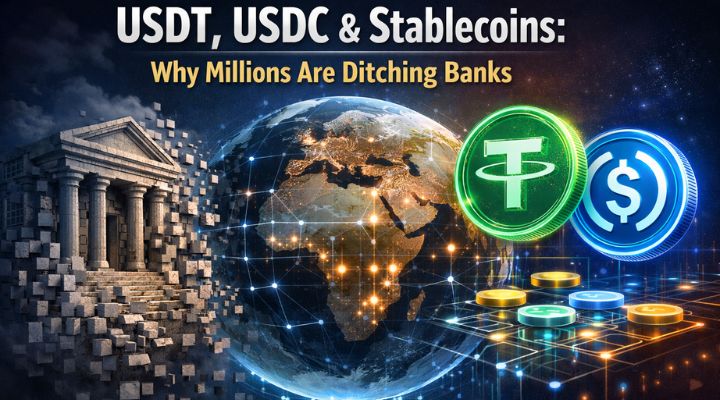

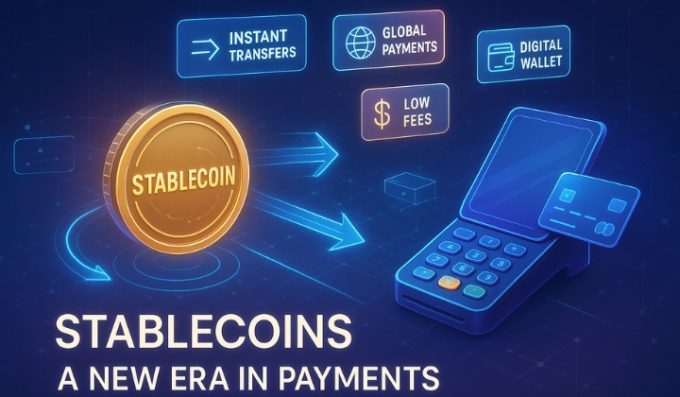
A payment system that was quick, efficient, could transfer funds across borders seamlessly that too without a typical bank just with a digital wallet. This was something unimaginable made true with cryptos particularly stable coins!
In particular, USDT and USDC — two leading stablecoins along with new digital alternatives, are redefining how money moves around the world. Let’s explore how and why these digital dollar alternatives are evolving into everyday financial tools, even in places where banks once ruled.
Before digging deep into it, let us understand the concept and functionality of these stablecoins.
What is USDT?
Issued by Tether limited also known as Tether, USDT is a cryptocurrency that is backed by US $ directly. This helps in maintaining fixed value. Tether (USDT) is a globally famous digital asset. It’s worth is approx $1 for 1 USDT.
What is USDC?
USD Coin i.e. USDC like USDT is a stablecoin. It also is anchored by US dollar to maintain its value stability. This coin is issued by Circle Internet Group. This stable coins is more keen on regulation and compliance.
Both of these digital dollar substitutes are based on blockchain technology and enable anyone with internet access to hold, send, or receive money anywhere in the world.
How Stablecoins Work
How stablecoins function is that they are pegged to a real-world asset, which is most often a fiat currency, such as the US dollar, so that it doesn’t fluctuate wildly like Bitcoin or Ethereum. This is done by holding an equivalent amount of assets (such as cash or bonds) for each stablecoin in existence.
Here is how it works in a nutshell:
- You put money into the system.
- The system holds that money in reserve.
- You receive an equivalent amount of stablecoins (USDT or USDC).
- You can then use those stablecoins however you want, like digital cash.
This is why so many people find stablecoins to be so much easier and safer to use than volatile crypto coins.
Crypto Replacing Banks:
The Rise of Stablecoins as Financial Instruments
When people refer to “crypto replacing banks,” they usually have in mind fully decentralized financial systems. However, the truth is much more interesting and useful: cryptocurrency, fueled by stablecoins, is now providing real alternatives to traditional banking services, particularly in cases where banks are slow, expensive, or difficult to access.
1- Faster and Less Expensive Cross-Border Payments
Historically, cross-border money transfers involved banks, intermediate financial institutions, and the SWIFT network. These networks took days to complete and were very costly. By contrast, stablecoins such as USDT and USDC enable individuals to make money transfers directly on a blockchain, bypassing several middlemen.
This allows:
- Money transfers in minutes or seconds.
- Costs that are a tiny fraction of bank transfer fees.
- Transfers 24/7, not restricted by banking hours. This is one reason why stablecoins for international payments are becoming so attractive.
2- Lower Costs and Global Reach
Bank accounts may have monthly charges, minimum balances, or expensive wire transfers. Stablecoins do not. Using an internet wallet and stablecoins, a person can send and receive money without borders. When asked “why people use stablecoins instead of banks,” lower costs and accessibility are the first reasons given.
3- Replacing Bank Deposits
In regions where banks are not stable or inflation is high, stablecoins provide a safe alternative by maintaining value in relation to the US dollar. For instance, in Africa, South America, and Southeast Asia, people use USDT to prevent fast depreciation due to the devaluation of their currencies.
This is another way that USDT and USDC are replacing traditional banks: by serving as savings and spending tools without requiring a banking license.
Stablecoins vs Banks for Global Payments
Comparing stablecoins and banks highlights dramatic differences:
Features |
Banks |
Stablecoins |
| Settlement Time | 1-3 business days | Few seconds/ minutes |
| Charges | High (certain % of the amount) | 0.1% or less |
| Accessibility | Limited by branch or account | Anyone with internet can access |
| Operational Hours | Business hours during weekdays | 24*7 |
| Borderless | These transactions are slower and expensive | Instant |
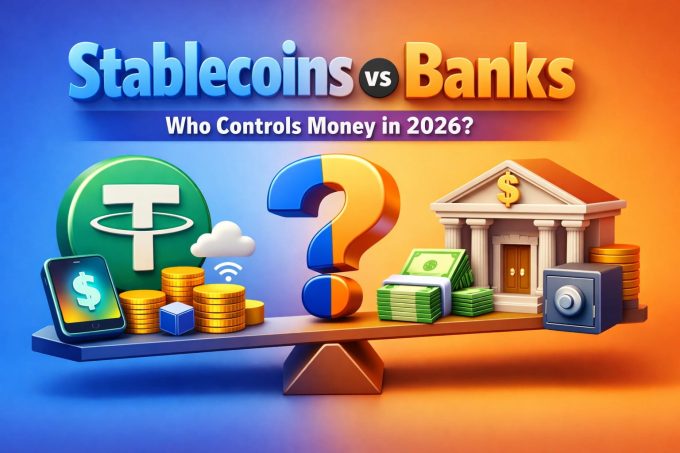
This is why stablecoins vs banks for global payments is no longer a theoretical discussion — it’s a practical reality for many users worldwide.
USDT vs USDC: Which is Safer?
In the context of “USDT vs USDC which is safer,” the factor of safety is contingent on the transparency of reserves and regulatory compliance.
USDC focuses on the importance of audits, transparency, and regulatory clarity, making it relatively safer and more institutional.
USDT is still the largest in terms of market size, but it has been criticized for a lack of transparency and reserve disclosure, raising some concerns among analysts.
Most analysts feel that the rigid structure of USDC gives it an edge in terms of safety, although both are major players in international finance.
Why Millions Use USDT Instead of Banks
Although both stablecoins and banks co-exist, millions of people today choose to hold USDT or USDC instead for the following reasons, among others:
- No need for a bank account
- Fast and cheap money transfers
- Insulation from local currency fluctuations
- Improved access to digital financial services
This is particularly true in countries where banking services are not readily available or are costly. Stablecoins give the common man the power to make payments, from migrant workers sending money back home to small businesses paying suppliers abroad.
Thus, the question “why millions use USDT instead of banks” is answered by real economic needs — access, speed, and affordability.
How Stablecoins Help Unbanked Populations
Approximately 1.7 billion people worldwide do not have bank accounts. For some, the reasons may be documentation, a lack of branches in the vicinity, and the cost of opening an account. Stablecoins provide a solution because:
- A digital wallet is all you need.
- You don’t need bank intermediaries for transactions.
- There is no paperwork involved in the transaction.
This is one of the strongest arguments for crypto replacing banks in developing countries. Stablecoins not only offer digital dollars but also financial inclusion for those who are not part of the banking system.
Digital Dollar Alternatives Beyond USDT and USDC
In today’s world the digital tokens (stablecoins) are going beyond just USDT & USDC. Newer entrants which are regional token, token issued by banks are a part of the market. With their differentiating features and support of regulation it might become easier for them to gain attention.
These new stablecoins aim to:
- Offer better yields
- Provision of better clarity of regulations
- Integration with existing systems- banks and payment both
- Serve local currency needs: For eg- Euro-pegged stablecoins which are supported by banks in Europe which gives better yields.
This trend is crucial, because it means new stablecoins challenging USDT and USDC could offer more options for users worldwide, leading to even broader adoption of digital financial systems.
What This Means for the Future of Money
Stablecoins aren’t just another crypto niche — they’re increasingly core to the digital future of finance. As regulators clarify rules (as seen with discussions about legal frameworks both in the U.S. and other regions), stablecoins will become even more integrated with mainstream financial infrastructure.
In some ways, stablecoins act like digital banks without branches — offering the same services without traditional gatekeepers. They’re fast, global, and available around the clock.
Millions using USDT and USDC today are not merely early adopters — they represent a global shift toward financial systems that are more accessible, more inclusive, and more responsive to modern needs.
Conclusion
These crypto tokens are creating a new financial system. Form everyday transactions to large cross-border settlements, are becoming easier, reliable and accessible. In a way they are re-inventing the world of money. They offer:
- Digital dollar stability
- Quicker, and less costly modes of money transfer
- Borderless access without banks
- New alternatives that challenge traditional financial models
In essence, crypto replacing banks isn’t just about technology — it’s about empowering people and markets worldwide. As this evolution continues, stablecoins will remain at the center of a truly global financial transformation.
You need to login in order to Like














Leave a comment