
Bitcoin mining is the process that keeps the Bitcoin network running, secure, and decentralized. For beginners, it may sound complicated, but once you break it down, it’s much easier to understand.
What Is Bitcoin Mining?
Bitcoin mining is the process of verifying Bitcoin transactions and adding them to the blockchain (a public digital ledger). In return, miners are rewarded with newly created bitcoins and transaction fees.
‘Mining’ plays a very crucial role in Bitcoin (BTC) trading and for beginners who intend to take mining as a fulltime profession, it is an essential to use effective tools to improve winning chances.
Needless to say Bitcoin mining requires basic understanding of market functioning and business acumen and an eye to understand underlying trend.
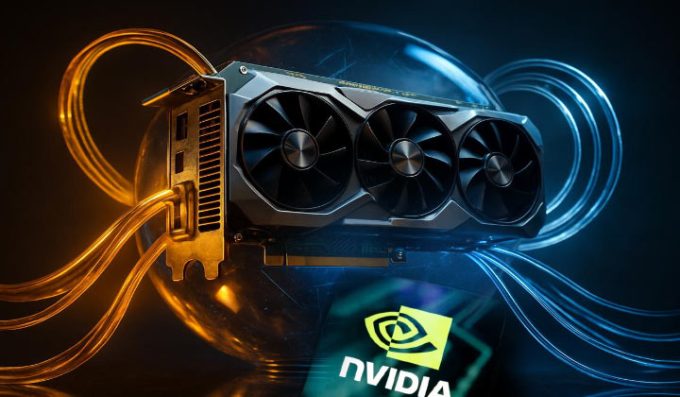
Generally speaking, you could try mining cryptocurrencies using a CPUs (central processing units), GPUs (graphic processing units), FPGA (field-programmable gate array), or ASIC (application-specific integrated circuit) machine.
Apart from the above various other electronic apparatus are needed to send/receive data at super speed and most importantly uninterrupted power source for carrying out seamless computational process.
Earlier, Bitcoin users could join the mining rig with their personal computers. Nowadays, profitable mining requires the use of highly specialized mining rigs. Since solo mining is very difficult, many miners opt to join a mining pool to increase their chances of getting a block reward, which is then shared proportionally between pool members.
How Bitcoin Mining Works
Here’s a simple step-by-step explanation:
1- Transactions occur – People send and receive Bitcoin.
2- Transactions are grouped into a block.
3- Miners compete to solve a complex mathematical puzzle.
4- The first miner to solve it adds the block to the blockchain.
5- The miner earns rewards in Bitcoin.
This system is called Proof of Work, and it ensures the network remains secure.
Bitcoin mining ensures that the blockchain is up-to-date with legitimate transactions. When a new Bitcoin is created – after other network users of node verify and confirm its validity – it is the miners responsibility to collect, new as well as pending transactions and group them into a new, verified candidate block.
The goal of a miner is to find a valid block hash for their candidate block. A block hash begins with certain amount of a zeros. It is a string of numbers and letters that functions as a unique ID for each block. The miner would gather the hash of previous block to create new hash. A valid block hash proves that the miner did the necessary work to validate their candidate block (hence Proof of Work).
As soon as a miner finds a valid hash, they can validate their candidate block and collect the bitcoin rewards. Each new block provides the respective miner a block reward, which consists of newly generated bitcoins (block subsidy) plus transaction fees.
Earlier, the Bitcoin block subsidy started at 50 BTC in 2009 and is being reduced in half every 210.000 blocks (roughly four years). It halved to 25 BTC in 2012, then to 12.5 BTC in 2016, and finally to 6.25 BTC in 2020. Next halving event is expected to occur in 2024.
The initial investment for profitable mining is very high, and there are many risks involved. Returns are also linked to market conditions and external factors such as energy prices and hardware improvements.
What Do You Need to Start Bitcoin Mining?
For beginners, here’s what’s required:
1. Mining Hardware
-
ASIC miners (most powerful and commonly used today)
-
GPUs and CPUs are no longer profitable for Bitcoin mining
2. Mining Software
Software connects your hardware to the Bitcoin network and mining pools.
3. Electricity
Bitcoin mining consumes a lot of electricity, which is a major cost factor.
4. Bitcoin Wallet
You need a wallet to receive and store your mining rewards.
5. Mining Pool (Recommended for Beginners)
Instead of mining alone, beginners usually join mining pools to earn smaller but more consistent rewards.
Is Bitcoin Mining Profitable for Beginners?
Profitability depends on several factors:
-
Cost of electricity
-
Efficiency of mining hardware
-
Bitcoin price
-
Mining difficulty
-
Pool fees
Risks and Challenges
Before starting, beginners should be aware of the risks:
-
High upfront hardware costs
-
Rising electricity bills
-
Bitcoin price volatility
-
Increasing mining difficulty
-
Scams in cloud mining services
Always research before investing money.
Is Bitcoin Mining Legal?
Bitcoin mining legality depends on your country or region. In many places, mining is legal, but regulations around crypto and electricity usage may apply. Beginners should always check local laws before starting.
Should Beginners Start Bitcoin Mining?
Bitcoin mining can be educational and rewarding, but it’s not a “get-rich-quick” method. For beginners:
-
It’s great for learning how Bitcoin works
-
It requires careful cost analysis
-
It’s often better treated as a long-term or experimental activity
Bitcoin mining is the backbone of the Bitcoin network. For beginners, understanding how it works is more important than jumping in immediately. Start by learning, calculating costs, and exploring mining pools before investing in hardware.
You need to login in order to Like