



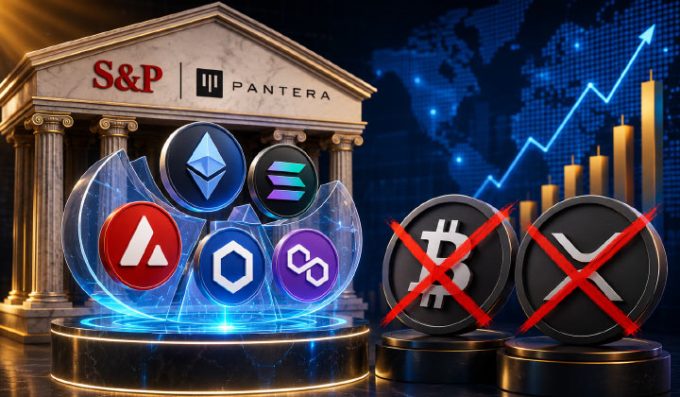
The launch of the S&P Pantera Digital Asset Index has sparked new debate in the crypto market because it left out both Bitcoin and XRP, but included a group of revenue-generating blockchain networks. S&P Dow Jones Indices and Pantera Capital created this new benchmark to track 18 digital assets chosen for their economic activity, not just their market value. Many investors were surprised, since Bitcoin and XRP are still some of the most well-known cryptocurrencies. By focusing on projects with strong protocol revenue and real-world use, the index has led some to wonder if institutional investors are starting to look at crypto assets in a new way.
The confirmed assets so far include Ethereum, BNB, Solana, Hyperliquid, Tron and Aave, with a total of 18 cryptocurrencies in the full list. Rather than tracking the biggest digital assets by market value, the index takes a different approach. It chooses blockchain networks that show clear economic activity and steady protocol revenue.
The announcement came as market sentiment was already improving, with Bitcoin rising above $66,000 and boosting risk appetite in the sector. With this positive mood, the new benchmark quickly became a hot topic on social media. Soon, though, the conversation moved from which assets were included to the big names that were left out.
Pantera says the screening process is based on financial viability standards similar to those used in the S&P 500. Projects need to show several quarters of positive protocol revenue above a set minimum. This revenue is checked using on-chain data from Artemis and must directly benefit token holders through things like buybacks, staking rewards after inflation, distributions, or treasuries controlled by token holders.
Pantera reported that the assets in the benchmark made over $3 billion in annualized protocol revenue in the last two quarters, even though the wider crypto market stayed fairly quiet. The company thinks this shows that some blockchain networks have moved past just speculation and are now creating real, lasting economic value.
Jon Ma, who worked with Pantera and S&P Dow Jones Indices on this project, called the benchmark a “fundamental index for crypto.” He said that the next round of institutional investment will probably focus on blockchain ecosystems with real utility, steady revenue, and active on-chain use, rather than just the largest by market value.
Cathy Clay, CEO of S&P Dow Jones Indices, said the benchmark uses the same disciplined, rules-based approach as traditional financial indices. She explained that the aim is to help investors find digital assets supported by clear economic fundamentals, not just market hype.

Source: X.com
Pantera also shared that they have started talking with asset managers about creating exchange-traded funds and other investment products tied to the new index. Although no ETF has launched yet, the company sees the benchmark as a base for future institutional crypto products.
Leaving out Bitcoin and XRP has split opinions in the industry. Some people see it as a surprising choice, while others think it shows a bigger change in how institutional investors might judge digital assets in the future. If revenue and network fundamentals become the main criteria for investment benchmarks, the next stage of the crypto market could look very different from past cycles.
Stay informed with the latest trends in Web3, blockchain innovation, and cybersecurity updates at 3verseTV
You need to login in order to Like















Leave a comment