


Key Takeaways
- South Korea’s digital finance transformation is progressing as Samsung SDS collaborates with Korea Securities Depository to develop a blockchain-based tokenized securities platform.
- The initiative’s main goals are to increase digital asset tracking in real time, efficiency, and transparency.
- Tokenized securities will be issued and traded thanks to the platform’s integration of distributed ledger technology with current infrastructure.
- The industry is expanding because of the rising demand for asset tokenization, including digital and real estate assets.
Are digital securities the next trillion-dollar opportunity?
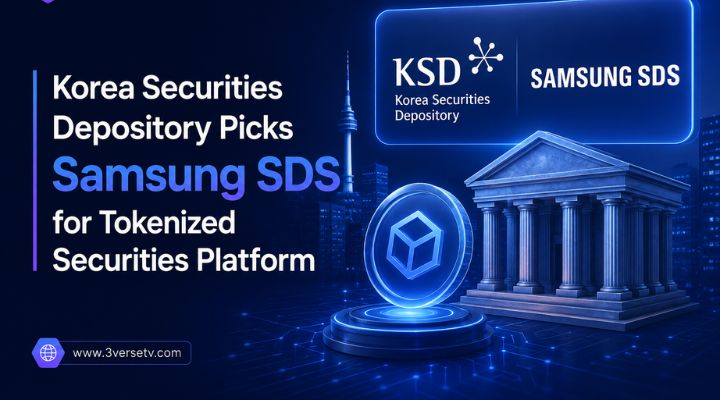
The Korea Securities Depository (KSD) has awarded Samsung SDS a contract to develop and run a tokenized securities platform, which is a step toward developing Korea’s digital asset infrastructure.
Tokenized securities are traditional financial assets, like stocks, bonds, or real estate, that are issued or registered on distributed ledgers, like blockchain, enabling safe digital tracking and transfer of ownership and rights.
Retail investors can engage more easily because the structure allows fractional ownership and streamlines post-trade procedures.
Can Blockchain Unlock A New Era Of Transparent Securities Markets?
As demand for tokenizing financial products and converting assets like data, artwork, and real estate into tradable digital instruments increases, tokenized securities have been gaining popularity.
As part of the initiative, KSD intends to integrate a blockchain-based ledger with its current electronic securities account system to improve tokenized securities issuance and rights management while becoming ready for future market expansion.
In order to provide transparency throughout all transactions and enable market participants to trade with confidence, Samsung SDS will deploy a total volume management system that tracks the issue and circulation of tokenized securities in real time.
Can This Platform Redefine Digital Securities By 2027?
The business will also construct the essential infrastructure required to operate the platform, such as a distributed ledger system architecture, a gateway system, and a framework for controlling and maintaining blockchain nodes.
By February 2027, the platform will be finished, transforming the existing testbed, which has primarily been used for technology validation, into a full-scale system that can manage real-time transactions and guarantee dependable service operations.
By completing a functional analysis project in 2024 and creating a testbed platform in 2025, Samsung SDS has been expanding its knowledge of tokenized securities.
“We will execute this initiative in a stable manner, drawing on our experience in tokenized securities projects, blockchain, and IT infrastructure,” stated Lee Jeong-heon, executive vice president of Samsung SDS’s strategic marketing office.
“Our goal is to make this project a flagship success story in digital assets and contribute to the vitalization of the tokenized securities market.”
Conclusion
From paper to chain, finance breaks the old chain. Through this project, South Korea is making a significant contribution to the development of a contemporary digital banking system. The initiative intends to develop a more effective, transparent, and scalable market environment by integrating blockchain technology with the current securities infrastructure.
Additionally, it shows that tokenization is becoming more widely accepted as a workable method for trading and asset management. This action could promote broader adoption among institutions and investors with a well-defined schedule and skilled implementation.
You need to login in order to Like














Leave a comment