



Introduction
The real estate business is seeing significant, long-term expansion, fueled by expanding urbanization and increased investments. As it is, the global real estate market size was valued at USD 7,517.4 billion in 2025.
Looking ahead, global management consulting firm IMARC Group estimates the market to reach USD 8,760.4 billion by 2034, exhibiting a compound annual growth rate (CAGR) of 1.66% from 2026-2034.
The real estate sector struggles with a lack of transparency and confidence in data and record keeping. The public records for land titles are maintained locally, and the lenders need to contact the relevant local entities for each title assurance process. Hence, the maintenance cost of asset data from a transactional perspective is high.
The real estate industry is suffering a myriad of challenges including the establishment of trust, the efficiency of data sharing and adequacy of automation processes.
A solution for recording, monitoring, and transferring properties in a secure way can drastically reduce title search, examination time, and costs. This is exactly what blockchain technology is doing.
Blockchain technology is transforming the real estate industry with the power of decentralized ledger record-keeping, smart contracts and tokenization of assets that enhance transparency, efficiency and security.
Thus, removing old inefficiencies, lowering fraud, and increasing the accessibility of real estate investments for a worldwide audience.
What Is Blockchain?
Blockchain is a distributed and decentralized public ledger database which records all transactions and creates the data for every transaction.
Multiple new and unique data elements (such as purchaser, seller, purchase date and time, purchase amount, and more) are created for each transaction.
This data is bundled together in groups of transactions that are chained sequentially. Data or transactions on the Blockchain cannot be manipulated or tampered with as it is spread across the network of users who store and verify each transaction. Thus, the integrity of the transactions is maintained
Traditional Methods Used In Real Estate
In the past, traditional real estate record-keeping techniques have tracked property ownership, transactions, and financial information using manual, physical, paper-based procedures. These traditional, basic methods are still used in audit trails and legal documentation, despite the fact that many firms have switched to digital.
Physical Filing Cabinets: The main method of storing information related to real estate deals was done on paper. Physical files are maintained by keeping copies of property documents, lease agreement, registries, maintenance invoices etc
Manual Verification: Before buying or selling a property, parties have to physically examine all documentation related to Ownership records, court judgements, tax payments, outstanding loans and zoning laws. This process may involve going to government offices, looking at hard copies of documents and speaking to attorneys. This kind of manual verification can be very laborious, time consuming as well as prone to human error.
District Collector Recording: Sending paper deeds, mortgages, and liens, which is a legal right or claim held by a creditor against a debtor’s property or assets to secure payment of a debt, to the district Collector clerk offices to establish a public, verifiable chain of title.
Spreadsheets (Pre-accounting Software): Paper was replaced by early digital, but manual, tracking of income and expenses in Excel or a comparable program, which still required manual data entry for each transaction.
Key Challenges In Traditional Real Estate System
Here are a few drawbacks in traditional methods used in Real estate system:
Inefficiency: Physical file retrieval, organization, and search are labor intensive and slow processes. Managing paperwork alone is thought to take up 20% of a real estate company’s time.
High Storage Costs: A large amount of office space is needed for physical files.
Fragmented Data & System Integration: Property management software, accounting platforms, and customer relationship management databases are just a few examples of the departments, agents, and storage sites where data is segregated in many real estate companies. This fragmentation makes it impossible to view performance and operations across the whole company without first manually merging and balancing data from numerous sources.
Limited Access: Remote cooperation is often limited by the fact that records are often only accessible to one person at a time.
High Operational Costs: Traditional real estate systems required huge storage space for physical files. Moreover, staff is required to manage, retrieve and update these paper documents, all of this raises operational costs.
Real Estate Frauds: There are a number of frauds prevalent in the real estate sector like fake ownership fraud, multiple booking/sale fraud, rental scams, land-grabbing fraud, disputed land fraud, pre-launch/unapproved projects fraud. Scammers offer properties they do not own or that do not exist, fraudsters sell projects before getting the required approvals, builders or agents sell the same property unit to several customers, and fraudsters falsify property titles to claim ownership. Early in 2026, Hyderabad police discovered a scam in which 2,500 people lost ₹3,000 crore in a pre-launch scheme.Despite the adoption of India’s Real Estate Regulation And Development Act 2016, old, non-digital methods like numerous bookings and faked documents continue to result in huge losses in real estate fraud in India. Investors lost almost ₹15,000 crore to different real estate scams in 2025 alone, according to estimates as of January 2026.
How Does Blockchain Work In Real Estate?
A blockchain is a smart digital ledger. It resembles a massive book in which each transaction is transparently and impenetrably recorded. Let’s now add real estate to the discussion.
In the past, purchasing or selling real estate required a ton of paperwork and back-and-forth. However, things go much more smoothly with blockchain as all transactions and data stored on it is completely transparent and cannot be changed.
All parties involved in a particular property deal can check and confirm the authenticity of that property records on the blockchain. This level of transparency builds trust in the real estate sector.
Moreover, smart contracts, that are digital agreements encoded into the blockchain automatically carrying out transactions in accordance with predetermined criteria thus lowering the possibility of fraud and human error.
Smart contracts guarantee the smooth transfer of ownership and assets in real estate transactions without the need for middlemen. The smart contract is activated when a buyer wants to purchase the property.
It instantly transfers ownership from the seller to the buyer after confirming the conditions of the contract and completing the transaction. Smart contracts automate a lot of operations that are often completed by middlemen thus saving time and money for all parties involved.
Since blockchain eliminates all middlemen like attorneys, brokers and agents, it lowers real estate transaction costs. Blockchain enables real estate tokenization, which transforms a physical property’s ownership rights into digital tokens on a blockchain.
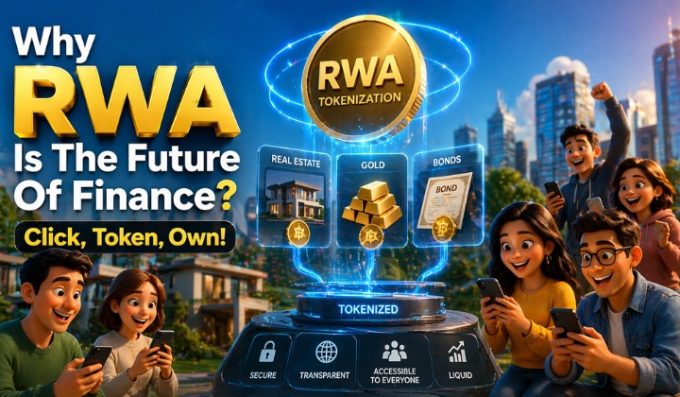
Tokenization makes fractional ownership possible, where investors can purchase smaller, more reasonably priced tokens that represent a portion of the equity, debt, or cash flows rather than buying the full property. Blockchain is used to record tokenized assets, guaranteeing data immutability, security, and ownership record transparency.
Real World Use Cases Of Blockchain In Real Estate
Here is a detailed account of various applications of blockchain in real estate-
Fractional Ownership
By making fractional ownership possible, blockchain has made real estate investment more accessible. Tokenization enables investors to buy fractions of high-value assets by dividing properties into smaller, tradable units. People who couldn’t invest in real estate earlier because of financial issues can now do so.
Streamlining Purchase & Rent Agreements
Since there are a lot of parties involved in a single property deal like landlords, tenants, brokers and property managers, it’s quite difficult to manage the intricacies of cash flows, property management, and leasing agreements. From the beginning of a leasing agreement, a number of payments and service transactions must be regularly recorded.
Smart Contracts can be used to execute a real estate lease to handle this complicated system. A clear, automated smart tenancy contract can take the place of the conventional lease contract and all its complexities. Without the need for human participation, the smart contract will automatically record payments and service transactions on a regular basis after the lease conditions are entered.
Fraud Reduction
In real estate transactions, where significant quantities of money are transferred and private information is discussed, security is crucial. Blockchain’s cryptographic methods guarantee that information kept on the ledger is safe from unwanted access and cannot be altered.
Furthermore, smart contracts lower the possibility of fraud and human error by automatically carrying out transactions in accordance with predetermined criteria. In addition to safeguarding buyers’ and sellers’ interests, this increased security improves the real estate market’s general integrity.
Investor & Tenant Identification
KYC procedures for tenants and real estate investors can be streamlined by blockchain identification systems. Blockchain makes it possible to create decentralized, unchangeable digital identities. This greatly reduces fraud and forgeries since once a tenant’s or investor’s background, credit history, and papers are confirmed and documented, they cannot be changed.
Land & Property Registries
By establishing a safe platform for document exchange and storage, blockchain simplifies land and property registration. All property details that are stored on blockchain can be instantly checked and confirmed by realtors. Blockchain makes this entire process easy and saves time.
Real World Case Studies
1. Dantewada District Land Registry (Chhattisgarh, India)
Organization: Dantewada District Administration + LegitDoc (Zupple Labs)
Blockchain: Avalanche
The district digitized 700,000+ land records dating back to the 1950s and secured them on the Avalanche blockchain.
Impact: The system has created tamper-proof ownership records enabling faster verification, reduced corruption, and secure digital land records for government services.
2. Dubai Land Department: Real Estate Tokenization
Organization: Dubai Land Department (DLD) with VARA, Dubai Future Foundation, Ctrl Alt
Blockchain: XRP Ledger (XRPL)
Dubai launched a blockchain-based property tokenization platform allowing fractional ownership of real estate.
First tokenized property attracted 224 investors from 44 countries and sold out within 24 hours.
Impact: Lower entry barriers to real estate investment and faster property transactions.
Challenges Of Integrating Blockchain Into Real Estate Business
There is no doubt about the fact that the real estate industry will benefit from blockchain technology but there are a few hurdles on its way to a wider adoption
Standardization
Blockchain implementation across many real estate platforms and jurisdictions is hampered by interoperability and standards. The real estate industry may become fragmented and inefficient as a result of incompatibilities between various blockchain systems and protocols. To provide common protocols and standards for data interchange and smart contracts in real estate transactions, standardization initiatives are required.
Resistance To Change
The real estate sector is renowned for its conventional methods and reluctance to adapt. Convincing middlemen to switch to new technology is difficult and time taking especially for those who are benefitting from the on-going process.
Legal & Regulatory Uncertainties
For enhanced blockchain integration, clear regulations and legal framework is required to facilitate tokens, smart contracts, and digital property records. Complex legal and regulatory systems that differ greatly between nations must be negotiated in real estate transactions.
How Real Estate Industry Can Accelerate Blockchain Adoption
Incentivize Early Adoption: Attractive Incentives should be provided to related parties and agents to make blockchain adoption alluring.
Educate Stakeholders: Workshops, seminars and webinars should be conducted with developers, buyers, agents and investors to educate them about the benefits of blockchain technology. Also, such case studies should be shared where blockchain reduced fraud, speeds up transactions and lowered costs etc.
Develop Clear Legal Frameworks: Regulations acknowledging blockchain-based property records must be established by governments.
Final Thoughts
According to the AURUM PropTech report, by 2030, the Indian real estate market is predicted to grow to $1 trillion, indicating the strong expansion of the global blockchain.
Tokenization was the most prevalent use case in the real estate sector as of late 2025, accounting for about 43% of all blockchain products. The CAGR for the Indian blockchain technology industry is anticipated to be 93.5% between 2025 and 2030 according to Grand view research.
Blockchain appears to have a promising future as more businesses and governments consider how it could significantly alter the global real estate sector. In a world that is digitizing quickly, blockchain technology could shape the future of real estate transactions.
Stay informed with the latest trends in Web3, blockchain innovation, and cybersecurity updates at 3verseTV
You need to login in order to Like















Leave a comment