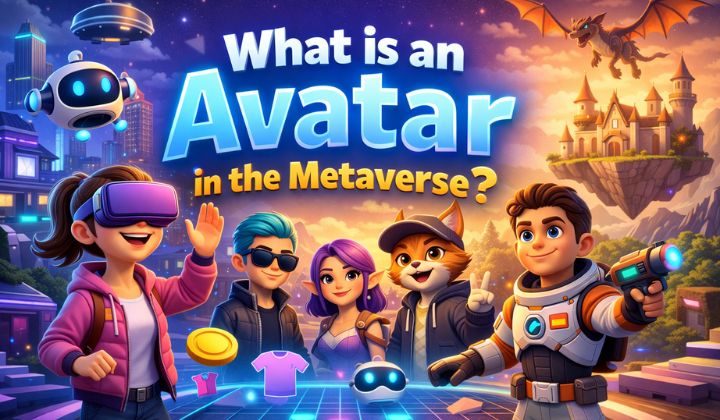
Avatars are a way of representing people in the virtual world. But, unlike the real world, our digital self does not have legs. In the metaverse, our go-to representations are now legless avatars.
They frequently float above the ground with only their heads, torsos, and hands, and the space where their feet could normally stand is only marked by a faint shadow.
What is an avatar in Metaverse?
Avatars are on-screen or virtual representations of the user;however they are not always highly realistic. They can take on any form, although they typically have movable arms, a torso, and expressive face features. A user’s online persona might be as different or as like their avatar.
- Virtual Reality Avatars: These avatars just need simple leg movements and in-world mobility because they have an upper torso and arms. Additionally, they include face-tracking capabilities for when collaboration and expressing emotion are required. These are typical on systems like Microsoft’s AltspaceVR, Meta’s Horizon Worlds, Spatial, and others.
- Embodied Avatars: Sensors are used by virtual reality devices to duplicate and recreate the movements of the entire body. The user now has more freedom and mobility to interact with digital assets inside of virtual spaces. This is a full body avatar unlike the virtual reality one.
Why are metaverse avatars without legs?
With lavish settings and engaging experiences, many virtual reality companies have introduced their products related to the metaverse. Even the Meta Quest avatars lack legs even thoughtech firm Meta has invested billions of dollars in the metaverse. The only parts of the cartoonish avatars’ bodies that are visible are their heads, torsos, and arms.
Lack of Camera Detection:
For a virtual reality engineer, legs provide a challenging difficulty. The movement of the hands and arms is rather simple to record because both the headset sensors and the handheld controllers can view a person’s shoulders, elbows, and hands. However, it can be challenging to constantly view a person’s knees, and feet from the perspective of a headset camera.
The lower portion of the body is not seen in Metaverse because headsets are unable to record a person’s entire body from head to toe due to the belly and other impediments that show in the scene. As a result, leg movements cannot be reliably recognized. A VR gadget would have to rely solely on information from motion.
Extra Cost:
The main reason is that modelling the motions of our legs would necessitate more sensors, and those sensors are costly and inconvenient. Legs are simply not worth the extra expense, according to companies developing the metaverse.
As of now, metaverse’s response to business limitations in the real world is legless avatars. They provide a clean manner for employees to communicate with one another at a low cost and without sacrificing productivity.
But, in future, giving avatars legs in the metaverse, it could improve the sense of presence and embodiment, making the digital experience more lifelike. Therefore, simulating walking and movement through the legs might enhance the immersiveness and naturalness of interactions.
You need to login in order to Like