



A draft rule intended to require banks and cryptocurrency businesses to gather additional data regarding some bitcoin transactions to private wallets has been withdrawn by the US Treasury Department.
In December 2020, the rule was first put forward. It was never implemented. Banks and cryptocurrency exchanges would have been required by the plan to record cryptocurrency transfers above $10,000 involving wallets under direct consumer control.
This idea has now been abandoned by the Financial Crimes Enforcement Network, or FinCEN. Additionally, it has dropped a different proposal that dealt with cryptocurrency mixers. The two rulings are part of the Trump administration’s attempt to make rules pertaining to digital assets more workable, according to FinCEN.
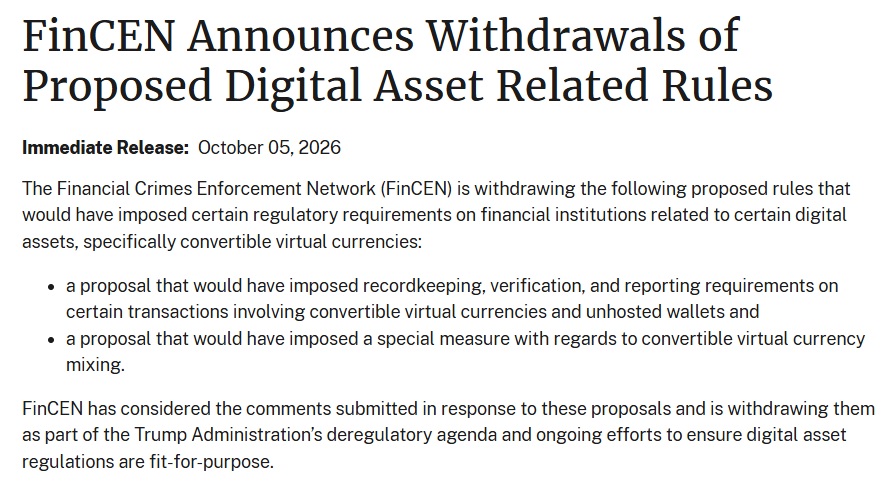
Source: fince.gov
In the latter weeks of Donald Trump’s first term, the wallet rule was put out. It concentrated on what authorities refer to as “unhosted wallets.” Instead than entrusting their cryptocurrency to an exchange, bank, or other business, users of these wallets maintain control over their private keys.
The proposed rule was quite specific. The bank or cryptocurrency company would have been required to make a report if a customer transferred or received more than $10,000 in cryptocurrency to or from a private wallet. To determine if they exceeded the $10,000 cap, transfers made within a 24-hour period might have also been totalled.
The proposal received thousands of comments from the public. But it stayed pending for years and was never put into effect.
Additionally, FinCEN withdrew a different 2023 plan pertaining to crypto mixing services. Crypto mixers are services that make tracking the flow of bitcoin between wallets more challenging.
Because criminals can utilize mixers to make it more difficult to identify the source of cash, regulators have been worried about them. The 2023 proposal would have treated certain crypto mixing transactions as a major money-laundering concern. It could have led to additional reporting requirements for financial institutions dealing with such transactions.
Both proposals have now been withdrawn.
1/ Today @FinCENnews formally withdrew two proposed rules: the 2020 unhosted wallet rule and the 2023 proposal on mixing. Both are positive for the digital asset ecosystem, and we appreciate FinCEN’s leadership.
— Crypto Council for Innovation (@crypto_council) October 5, 2026
FinCEN said the move is part of the Trump administration’s wider effort to reduce unnecessary regulation and make digital-asset rules “fit-for-purpose”. The decision is likely to be welcomed by parts of the crypto industry, especially people and companies that prefer users to have direct control over their own crypto.
Private wallets are an important part of how cryptocurrency works. A person does not have to keep Bitcoin or other digital assets on an exchange. They can hold the assets themselves and make transactions directly.
However, regulators have also been concerned about this. Banks and regulators could have less information when cryptocurrency is transferred between private wallets. This may make it more difficult to spot transactions connected to money laundering or other illicit activity.
The two proposals’ withdrawal does not absolve cryptocurrency companies of anti-money-laundering regulations. Under US law, banks, exchanges, and other financial companies are nevertheless subject to further regulations.
The main change is that the specific $10,000 private-wallet reporting proposal from 2020 will not move ahead.
For the crypto sector, the decision shows that the US government is taking a different approach to some digital-asset rules. Instead of bringing in the two proposed reporting systems, FinCEN has chosen to drop them and review how crypto regulation should work in practice.
Stay informed with the latest trends in Web3, blockchain innovation, and cybersecurity updates at 3verseTV
You need to login in order to Like

















Leave a comment