



Key Takeaways
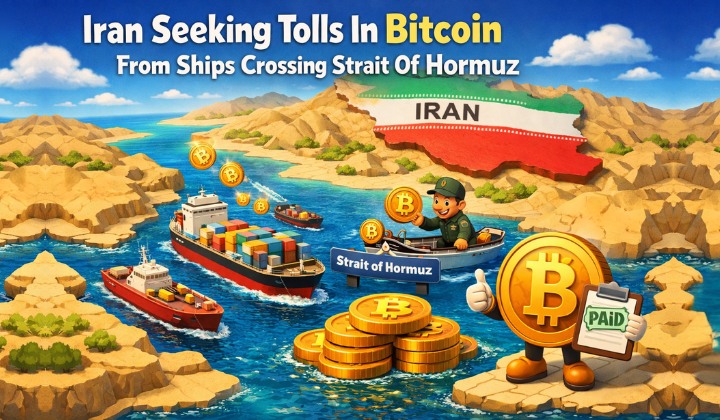
- Global shipping and oil flow are being slowed by the Strait of Hormuz conflict. Iran now requires ships to pay tolls in Chinese yuan or Bitcoin before passing through.
- Many vessels are delayed by fixed routes and strict approval regulations. Hundreds of ships are waiting at sea as daily ship activity has drastically decreased.
- Global trade pricing, LNG flow, and oil supplies are all impacted by this disturbance. Since international law prohibits tolls on natural maritime routes, legal problems are growing. Oman and the Gulf countries are against the action.
Barrels so vast, yet ships can’t pass… who turned free seas into a tolling class? Iran’s Islamic Revolutionary Guard Corps established new regulations for ships during the two-week ceasefire with the United States.
Cryptocurrency or Chinese yuan must be paid in advance for vessels travelling over the Strait of Hormuz. Before proceeding, crews must adhere to these procedures.
The Persian Gulf and the open ocean are connected by this slender marine passage. Every day, a large number of cargo ships and oil tankers travel through it.
According to a Wednesday report in the Financial Times, several crews reportedly claimed hearing broadcasts cautioning that ships without authorisation run the possibility of being targeted.
Iran’s New Rules Slow Hormuz Traffic
On specific days this week, very few ships were able to pass. Many others were forced to wait. Iran has implemented new regulations for all ships. Before arriving, ships must email the specifics of their cargo and vessel. Iranian officials must first give their consent.
Iran also instructs ships to travel along a route close to Larak Island and Qeshm Island. This path keeps along the coast. Certain ships pass easily and swiftly. Others are halted or experience delays.
Iran uses the yuan and cryptocurrency because regulations prohibit payments in dollars. Sanctions from the US and Europe make regular banking difficult.
Because it is digital, Bitcoin is more difficult to track. Yuan helps avoid banks in the West. Yuan payments have already begun. Many oil-producing nations are concerned about this change. They worry about losing influence in international trade.
Traffic Status In Strait Of Hormuz
| Before Conflict | Now | |
| LNG flow | 19% | Disrupted |
| Ships per day | 135 | 10–15 |
| Crude oil flow | 38% | Very low |
| Waiting ships | __ | 300–400 |
Free Route Or Paid Path?
The Gulf was referred to as a “car park” by shipping CEOs. Before taking a chance on passage, many owners are awaiting clarification. Tolls on man-made canals such as the Suez and Panama Canals are permitted under international maritime regulations. There, ships can pay to pass.
However, taxes are prohibited in natural maritime routes such as the Strait of Hormuz. Countries cannot tax ships for using such open rivers.
Gulf nations claim that this regulation violates the United Nations Convention on the Law of the Sea’s provisions on free movement. Oman opposes this plan as well.
Final Thought
Iran now employs this channel for electricity, according to experts. Without engaging in combat, it can exert pressure on international markets. Ship traffic is currently heavily monitored by Iranian authorities.
Helium, gas, and fertilisers are also transported via this route. Food prices and transportation expenses increase due to delays. Trade is delayed due to slow permissions.
You need to login in order to Like













Leave a comment