



Key Takeaways
- Jerome Powell and Scott Bessent cautioned leading institutions about the increasing cyber threat posed by AI. Anthropic unveiled Mythos AI, a powerful tool that can swiftly find and take advantage of system flaws.
- Banks must bolster their cybersecurity in order to defend themselves against AI attacks. Project Glasswing helps companies establish strong defences early on.
- AI can result in new cyberthreats even while it helps protect systems. Experts claim that in order to stop future AI incursions, banks must act immediately.
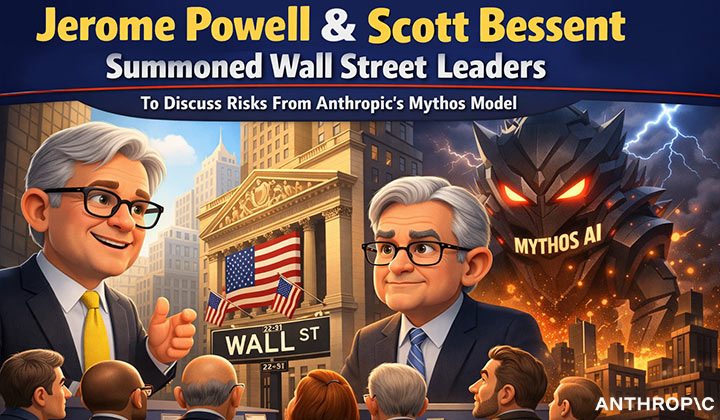
Fast as a blink, systems could sink, are we safer than we think? According to Bloomberg, Federal Reserve Chair Jerome Powell and US Treasury Secretary Scott Bessent summoned the largest US banks to Washington. The economy greatly depends on these banks.
The purpose of the gathering was to alert banks to potential dangers. Additionally, they advised banks to maintain readiness and safeguard their systems.
Anthropic introduced its latest Mythos AI to a select set of businesses on Wednesday. Project Glasswing is the name of this program. It is hoped that these companies would be able to strengthen their defences before malevolent actors have an opportunity to use these new technologies.
“Today’s AI is so powerful, it can spot and use software bugs faster than people. We’ve seen thousands of high-risk issues across major systems.” Anthropic said,
Too Risky To Release?
OpenAI has reportedly allowed a limited number of its partners to test a new cybersecurity tool because it is too risky to make public. Anthropic’s own caution is confirmed by regulators’ concern about the model’s potential for misuse by hackers.
At first, Anthropic’s availability was limited to a small number of major banks and technology companies. These businesses, including Amazon, Apple, and JPMorgan Chase, are involved in Project Glasswing, which aims to secure the most critical functions before the release of other comparable AI models.
Win Big… Or Lose Big?
We’ve talked about how the AI theme has gotten much more zero sum in the stock market during 2026. AI demand, for example, has helped memory and optical companies, while software equities have fallen to multi-year lows due to concerns about disruption.
A similar lens may be helpful for assessing AI’s influence on the economy, as evidenced by the high level of attention senior officials are paying to cybersecurity threats driven by AI and the demands they are making of their colleagues in the private sector.
In other words, as agents are empowered and stretched to handle growing workloads across organisations, the possibility of productivity gains may need to be weighed against left-tail risks.
Final Thought
Digital gold, no longer controlled, can banks stay safe or break the mold? Top bank CEOs met urgently with US authorities at the Treasury Department.
They swiftly convened the meeting to discuss the cybersecurity risks associated with AI. Anthropic’s new AI model, Claude Mythos Preview, is the source of these dangers.
You need to login in order to Like









Leave a comment