




“FASTER THE CHAIN, HARDER THE GAME.”
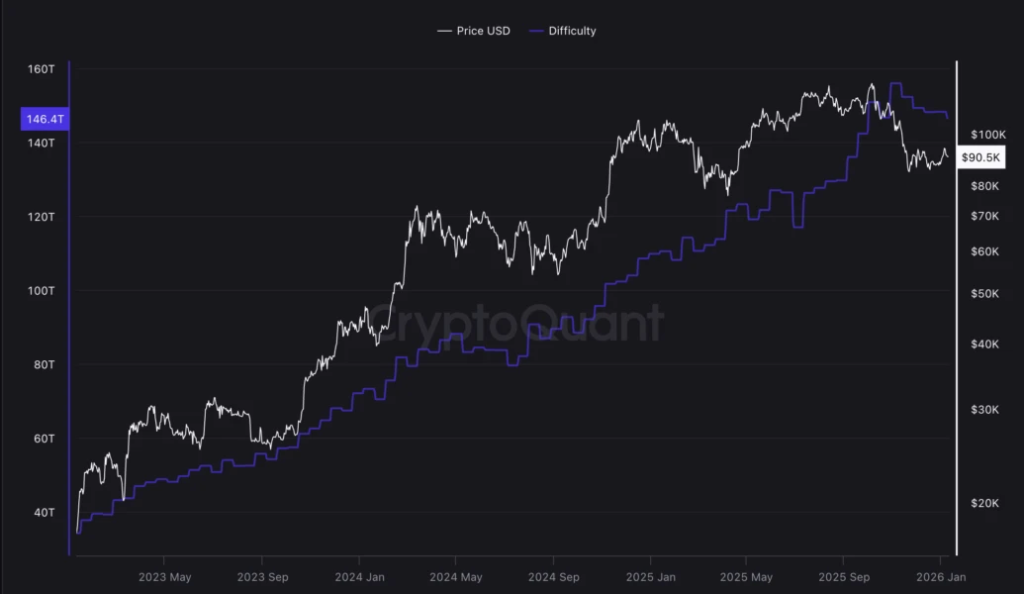
Will Block Times Increase and Make Bitcoin Mining More Difficult? According to on-chain data, Bitcoin’s mining difficulty dropped slightly to 146.4 trillion in the first network adjustment of 2026.
| Bitcoin Mining Difficulty (Jan 2026) | 146.4 trillion |
| Previous Trend | Near all-time highs at end of 2025 |
| Average Block Time | 9.88 minutes |
| Expected Difficulty Level | 148.2 trillion |
| 2025 All-Time High Difficulty | 155.9 trillion |
After mining difficulty reached near-record levels at the end of 2025, the most recent adjustment, made on January 11, showed a slight decline.
Bitcoin mining difficulty dropped to 146.4 trillion in the first 2026 adjustment due to slightly faster block times.
However, with average block times below 10 minutes, the next adjustment on Jan. 22 is expected to raise difficulty again as network hash rate remains strong.
Currently, the average block time is 9.88 minutes. That is a little faster than the desired speed. It shows that the Bitcoin network is producing blocks faster than expected. This suggests that network-wide hash rate participation is either steady or increasing.
The slight drop comes after a difficult year for Bitcoin miners. Mining difficulty reached an all-time high of 155.9 trillion in 2025. The profitability of miners decreased concurrently.
Margins were lowered by the April 2024 Bitcoin halving, declining BTC prices, and general macroeconomic pressure. In late 2025, the price of miner hash fell below breakeven points. Inefficient rigs had to be shut down by some miners.
The anticipated rise in difficulty indicates that miners are still active in spite of these obstacles. There has been some respite as the price of bitcoin has recovered from its November lows.
You need to login in order to Like















Leave a comment