
The first cryptocurrency on the planet was formed outside the realm of the hitherto existing payment infrastructure that largely comprised banks and other financial institutions.
The idea of such a cryptocurrency was to create a substitute for the traditional methods of payments that involved high transaction fees besides being substantially time-consuming.
The idea was to create a method of borderless and paperless payment gateway. And such an idea came to be known as Bitcoin in 2009 when Satoshi Nakamoto, a mysterious person of Japanese origin, is said to have introduced its white paper.
Thus, as the world today knows, bitcoin or simply put BTC, is a decentralized virtual currency, an electronic asset that exists on its own network to facilitate secure, online transactions directly between accounts without requiring an intermediary such as a bank or any other financial intermediary.
In today’s times, BTC, a brainchild of Satoshi Nakamoto, an imaginary person of Japanese origin, who is said to have launched it in 2009, is the most popular cryptocurrency.
Later, many other cryptocurrencies emerged such as Ethereum, Binance BNB, Litecoin, Dogecoin, etc., but BTC is still the most widely used and traded. However, for the sake of understanding, we will stick to Bitcoin here.
So, an individual can buy and own BTC and send them to someone else. Although the number of bitcoins has long crossed over 19 million, this number changes every 10 minutes when a block is “mined.
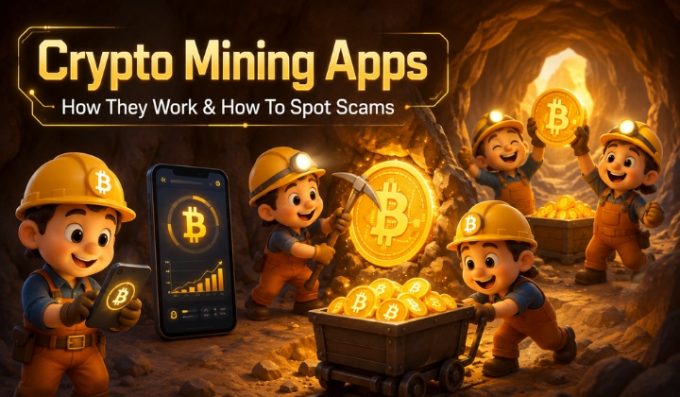
Bitcoin mining is the process of creating new bitcoins by solving extremely complicated math problems that verify transactions on the bitcoin blockchain.
When a bitcoin is successfully mined, the miner receives a predetermined amount of bitcoin. Total supply of Bitcoins is restricted to 21 million. If you do the math correctly, the last Bitcoin should be created by 2140! Market participants believe Bitcoin is more volatile since it is unregulated.
Bitcoin: An International Currency
Although BTC is mostly traded on all crypto exchanges, there’s no home country or geographical location to prove its origin.
Payments of BTC can be made from one person to another, irrespective of geographical location or jurisdiction.
Difference Between Bitcoin & Traditional Banking
In traditional banking, you have accounts that keep your money safe. In bitcoin, you have addresses. A bitcoin address is akin to a bank account number with a few differences. Just as you give your bank account details to receive a payment, in case of a bitcoin payment, you need to tell the payer your bitcoin address.
For a wallet to provide accurate information, it needs to be online or connected to a Bitcoin Blockchain file which it uses as its source of information. The wallet will read The Bitcoin Blockchain file and calculate the balance in each address.
The Technology Behind Bitcoin
A network of computers is used for keeping track of bitcoin payments and adds them to an ever-growing list of all the bitcoin payments that have been made. This list is a file called “The Bitcoin Blockchain” and sits on thousands of computers across the globe.
In case of BTC payment, the computers on the network validate the instruction and relay it to the other computers. After a few minutes, the payment gets included in one of the new blocks and is added to the Bitcoin Blockchain file on all the computers that are interlinked.
Payment Using Bitcoin
A payment is an instruction to unlink some bitcoins from an address you control and move them to the control of another address. The instruction is digitally signed with the private key of the address which currently holds the bitcoins. This digital signing demonstrates that you are the owner of the address in question since only you know the private key.
Wallet To Store Bitcoins
Bitcoin ownership is tracked on The Bitcoin Blockchain and bitcoins are associated with “bitcoin addresses.” Bitcoins themselves are not stored but the keys or passwords needed to make payments are stored, in “wallets” which are basically apps that manage the addresses, keys, balances and payments.
You need to login in order to Like