


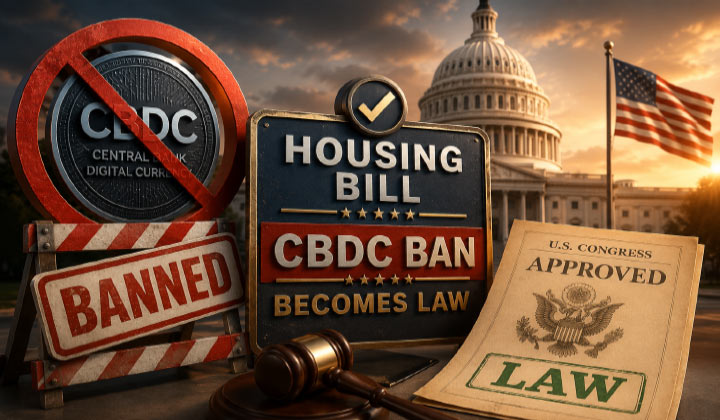
A major U.S. housing bill containing a provision that prohibits the Federal Reserve from issuing a central bank digital currency (CBDC) has officially become law after President Donald Trump chose not to sign the legislation. The bill received overwhelming bipartisan support in both the House of Representatives and the Senate before reaching the White House.
Although Trump opposed the legislation, his objections were unrelated to the CBDC provision. Instead, he argued that Congress should first pass legislation requiring proof of U.S. citizenship for participation in federal elections.
Under the U.S. Constitution, if a president neither signs nor vetoes a bill within 10 days while Congress remains in session, it automatically becomes law.
As a result, the measure has now taken effect, ensuring that the Federal Reserve is prohibited from issuing a retail digital dollar under the provisions of the housing legislation. The move marks another significant development in the ongoing debate surrounding CBDCs in the United States.
Stay informed with the latest trends in Web3, blockchain innovation, and cybersecurity updates at 3verseTV
You need to login in order to Like
















Leave a comment