


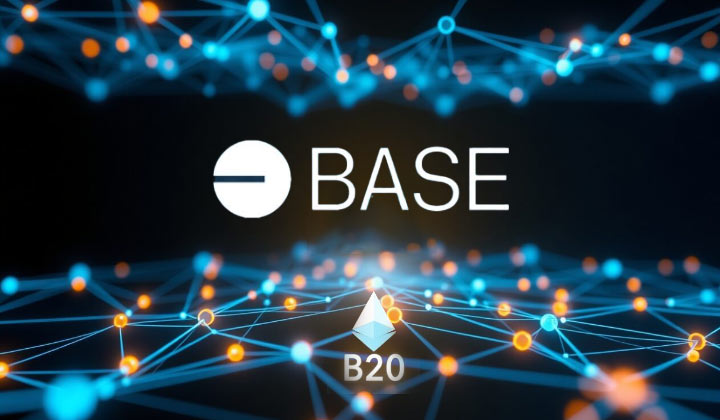
After postponing the distribution due to network stability concerns, Base finally released its B20 Native Token Standard on the mainnet on Wednesday. A new token standard for equity tokenization, tokenized real-world assets (RWAs), and stablecoins is introduced with the upgrade. It seeks to bring integrated compliance features, expedite execution, and lower transaction costs. The launch comes after Base had to delay the deployment until the network was deemed reliable due to a string of network disruptions in late June.
Building on Ethereum’s ERC-20 standard, B20 adds new functionalities while maintaining complete compatibility with current ERC-20 tokens. B20 makes use of Rust-based precompiles that are integrated into the Base blockchain rather than depending only on smart contracts.
It is anticipated that this architecture would increase productivity while reducing developers’ deployment expenses.
The B20’s integrated compliance architecture is one of its main advantages. Transfer regulations, role-based permissions, transaction memoranda, supply limitations, stopping mechanisms, and freeze-and-seize capabilities are all included in the standard. Additionally, it is compatible with current ERC-20 tools and enables minting, burning, and ERC-2612 permissions.
The new standard is particularly intended for tokenized securities, stablecoin issuers, and real-world asset initiatives that need regulatory restrictions, according to Base.
The rollout was originally scheduled for late June but was postponed after the network experienced two outages following the Beryl upgrade. In one incident, block production stopped for nearly two hours after an invalid block disrupted the sequencing process. A similar issue occurred the following day before normal operations resumed.
Although no user funds were lost, the incidents prompted Base to delay the activation until engineers were confident the network was stable.
Base founder Jesse Pollak previously acknowledged that such interruptions are unacceptable for infrastructure intended to support global financial systems. The company has since focused on improving network reliability before introducing the new token standard.
The B20 launch also reflects Base’s broader strategy of strengthening its infrastructure rather than introducing a native token. While speculation about a Base token continues within the crypto community, the development team has instead focused on building tools for institutional and enterprise blockchain adoption.
Supporters believe B20 could accelerate tokenization on Base by making compliance easier for regulated financial assets. Critics, however, argue that features such as asset freezing and seizure move public blockchains closer to centralized financial systems.
The success of B20 will likely depend on how widely developers adopt the standard and whether the network maintains stable performance in the months ahead.
The B20 Native Token Standard is scheduled to go live on July 8, 2026 at 18:00 UTC pic.twitter.com/IjDU4KY9zC
— Base Build (@buildonbase) July 7, 2026
Stay informed with the latest trends in Web3, blockchain innovation, and cybersecurity updates at 3verseTV
You need to login in order to Like















Leave a comment