



Key Takeaways
- South Korea recovered about $21 million in Bitcoin after a rare crypto theft case.
- The funds belonged to the Gwangju District Prosecutors’ Office and were stolen after investigators entered seed phrases on a phishing website.
- Police blocked the hacker from selling BTC on major exchanges, which helped recover 320.8 BTC.
- Authorities moved the Bitcoin to a safer wallet and began tracking the unknown hacker through wallet records and exchange logs.
PHISHING LINK, MONEY SINK, ONE BAD CLICK, FORTUNE ON THE BRINK
Click or Trick? How did they lose crypto so quickly? South Korean prosecutors received 320.8 BTC from a hacker this week. Nobody is able to identify the hacker. The hacker’s ability to sell Bitcoin on major exchanges had been hindered by the police. As a result, the hacker found it difficult to spend the money.
Last year, authorities in South Korea recovered about $21 million worth of stolen Bitcoin. The Gwangju District Prosecutors’ Office owned the money. This Bitcoin had been taken by the office earlier when they raided an illicit gambling website.
Today’s BTC Overview

Technical Analysis
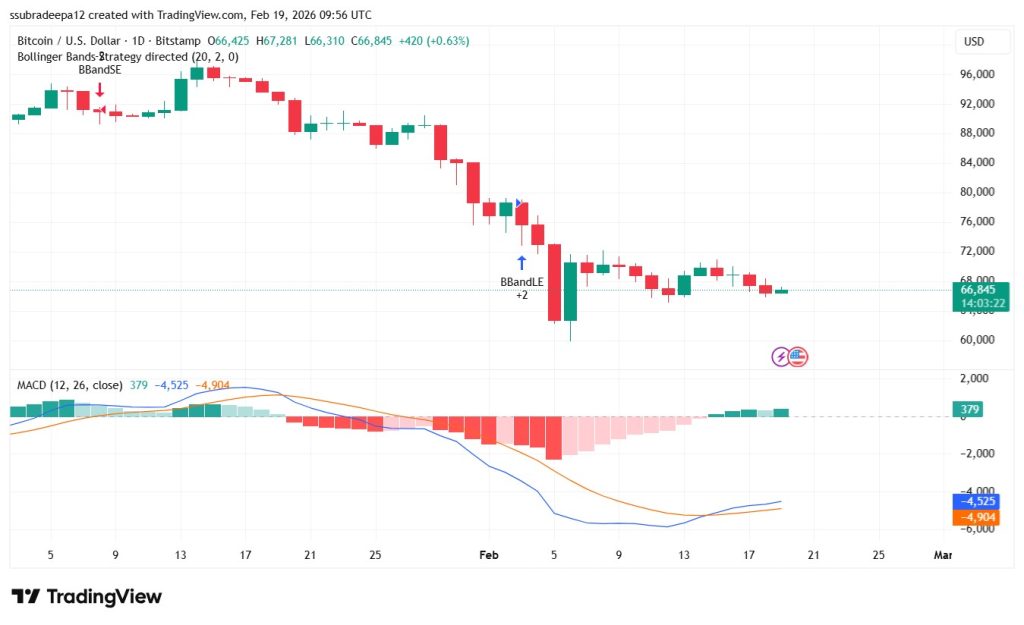
- The Bitcoin price is near $66,864 now. The price fell a little in the last 24 hours. The chart shows a short-term downtrend. The price stays below the 50-day and 100-day moving averages. This means sellers are stronger right now.
- The market also feels scared. The Fear & Greed Index is very low. It shows Extreme Fear. When people feel fear, they sell more.
- Bitcoin is moving inside a falling channel. This means the price slowly goes down step by step. Analysts also see a bearish pennant pattern. This pattern often comes before another drop.
- The RSI is near 32. This shows strong selling pressure. It also means Bitcoin is close to the oversold zone. Sometimes the price can bounce after this, but not always. The MACD shows a small good signal, but the main trend still looks weak.
Bitcoin Security Lesson From South Korea
There was a major error resulting in the theft. A phony website was accessed by investigators. The website was a phishing scam. There, they entered their coded recovery seed phrases.
After noticing this, the hacker took the Bitcoin in August. This demonstrates the potential threat of phishing links. Seed words should remain confidential, according to experts. They should never be typed on unidentified websites.
Protect Coins, Protect Trust
Prosecutors transferred the Bitcoin to a more secure exchange wallet after the hacker gave the money back. They wish to better safeguard it. To find the hacker, they also began a more thorough search. To find the individual, police are looking through cryptocurrency wallets, exchange logs, and online activity.
Many police departments were forced to review their crypto safety policies as a result of this instance. Officers might receive additional cyber safety training. To protect confiscated cryptocurrency, they might also employ hardware wallets, multi-signature security, and offline storage.
Steal or deal, truth will reveal. Police are still looking for the unidentified hacker even though South Korea received $21 million in Bitcoin back. Officers communicated secret seed phrases on a phoney website, costing the Gwangju District Prosecutors’ Office money.
Recovery was aided by the police stopping the hacker from selling Bitcoin. To prevent future hacks, organisations now employ safer tools, train officers, and assess crypto safety.
You need to login in order to Like















Leave a comment