


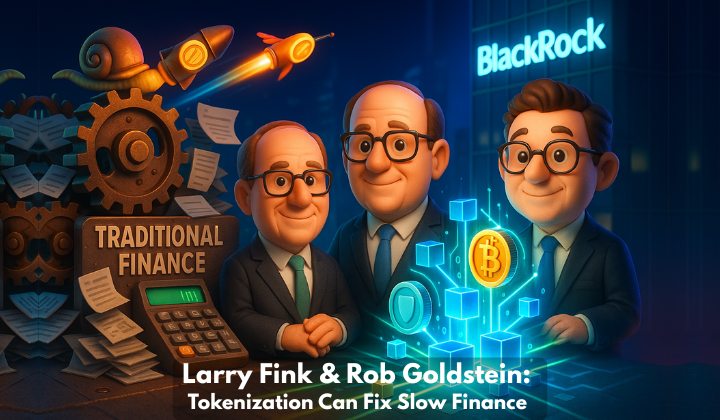
“Old systems fade, new rails are made — with tokenisation, the future won’t wait.”
The finance industry may be entering a new era, and BlackRock’s leadership believes tokenisation is the key.
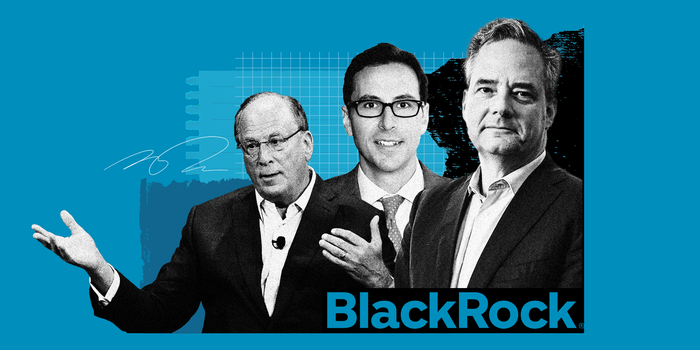
Tokenisation might modernise financial markets by making them quicker, less expensive, and more accessible to all, according to CEO Larry Fink and COO Rob Goldstein in a recent essay for The Economist.
Their message is clear – finance is changing, and blockchain is going to drive that transition.
Tokenisation is taking any asset, such as real estate, bonds, or private equity, and transforming it into digital tokens on a blockchain. This technique makes owning high-value assets easier since people can buy smaller “fractional” amounts.
As a result, markets that were previously exclusive to wealthy players are now accessible to a greater number of retail investors.
This increases access and enhances liquidity, two important objectives for the expansion of the global financial system.
Blockchain technology can reduce settlement times from days to minutes, as BlackRock emphasises. Smart contracts replace middlemen, cutting fees and eliminating errors.
The shared ledger approach also enhances transparency, which can help establish confidence between users and market institutions.
BlackRock is hardly the only company making this change. Firms like J.P. Morgan and Franklin Templeton are already constructing tokenised funds and exploring real-world blockchain solutions. But obstacles still persist, including legislative gaps, cybersecurity issues, and linking disparate blockchain systems.
You need to login in order to Like
















Leave a comment